Traveling to Mexico City means diving into a vibrant, intense metropolis full of contrasts. Pre-Hispanic ruins, colonial landmarks, modern skyscrapers, and a living culture that shows up on every street corner coexist here without apology — it’s no surprise the city has been named a UNESCO World Heritage Site and stands as one of Mexico’s top travel destinations. This guide is for people who want to go beyond the surface — from the unmissable spots to the less touristy plans — with practical tips drawn from firsthand experience.
Mexico City is the kind of place that grabs you with its vibrant chaos, its mix of history and modernity, and that energy that never seems to switch off.
Some useful facts about Mexico City
Located in the Valley of Mexico, at the center of the country, it’s the nation’s capital and the largest city in Latin America. It sits at 2,240 meters above sea level, surrounded by mountains and volcanoes. One thing that surprises first-time visitors is its sheer size. As the plane descends, you look in every direction and see nothing but city. That makes sense when you consider it covers more than 1,400 km² of urban area and is home to over 9 million people — 21 million if you include the greater metro area.
Mexico City was founded in 1325 as Tenochtitlán by the Mexica people. The Spanish conquered and destroyed it in 1521, rebuilding it as the capital of the viceroyalty. That layered history shows up everywhere: from Aztec ruins to Baroque buildings to contemporary museums.
What’s the best time to visit Mexico City?
The city has a mild climate year-round. The best time to visit is from November to April, during the dry season. Try to avoid June through September if you don’t want to deal with heavy afternoon rain. October and November are ideal if you want to experience traditions like Día de Muertos.
How many days do I need to see Mexico City?
The city is so large and diverse that any short trip will feel incomplete, but somewhere between 5 and 7 days is a solid starting point. You can split your time between the Historic Center, neighborhoods like Coyoacán or Roma, museums, parks, and day trips to nearby sites.
Is Mexico City safe for tourists?
As mentioned, Mexico City is enormous and has plenty of neighborhoods that are not recommended for tourists. That said, if you stick to the tourist zones and trendy neighborhoods, and follow the basic safety measures you’d apply in any large city (especially in Latin America), you should be fine.
A few precautions that will keep you out of trouble:
- Dress modestly — no flashy jewelry or accessories.
- Stick to tourist zones and popular neighborhoods. If you’re unsure about an area, ask at your hotel’s front desk.
- Avoid long walks at night. For longer trips after dark, use transport.
- Avoid unlicensed taxis. Apps like Uber, Cabify, and similar services offer the best safety guarantees.
- Be respectful and polite with people.
Must-see places in Mexico City
Mexico City is chaotic, overwhelming, and at the same time deeply fascinating. Every neighborhood has its own soul, its history, its rhythm. You could spend years here and always find something new. But if you arrive with an open mind and your senses switched on, the city wraps around you and changes you. These are some of the places that, at least for me, are essential.
Zócalo (Constitution Square)
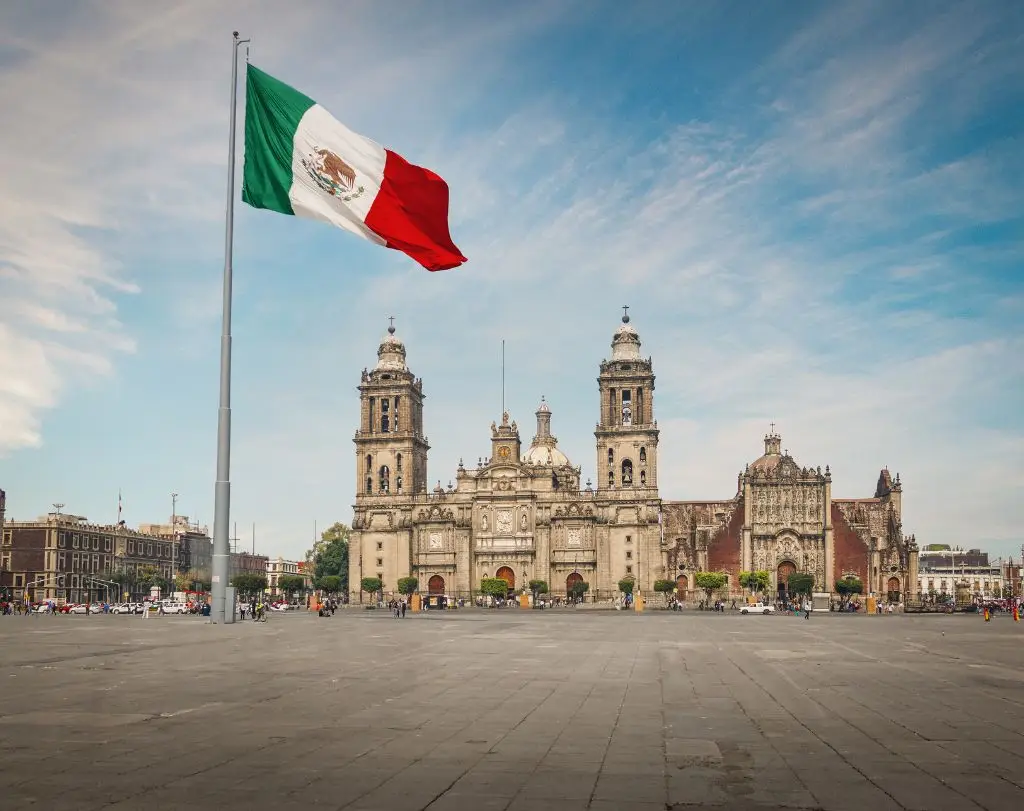
The Zócalo isn’t just a huge square in the center of the city. It’s more like an open-air theater where every day brings a different show. You feel the city’s pulse there — protest chants mixing with children’s laughter, political marches colliding with spontaneous dancing. It’s a beautiful mess.
The first time I stepped onto it, it felt like opening a book without knowing what it was about. Then everything started speaking: the buildings, the people, even the wind cutting between the flags. The Cathedral watches it all with patience, while the National Palace keeps its secrets behind murals and columns.
Don’t expect peace and quiet, though. There’s noise, vendors everywhere, sweet and spicy smells floating in the air, and organ grinders playing. There can be tents, protests, fairs — or all of it at the same time. But that’s exactly what gives the place its character.
Metropolitan Cathedral
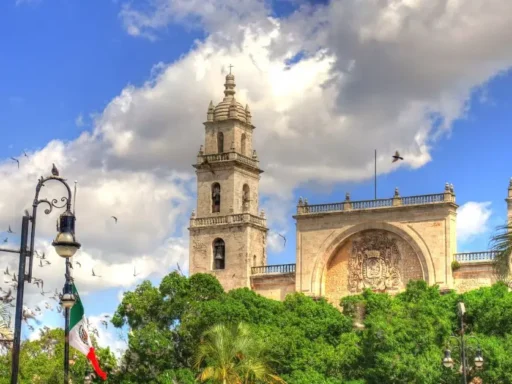
It’s impossible to walk past the Metropolitan Cathedral without something compelling you to look up. It has a presence that commands attention, as if reminding you it was there long before any of us arrived and will still be standing long after. Its facade is a gorgeous tangle of styles — Baroque, Neoclassical, Renaissance — as if time itself got trapped between its stones. What surprises most is the brutal contrast with what surrounds it. Outside, the Zócalo buzzes with noise and movement. Inside, everything shifts: the air becomes denser, slower. Walking through its central nave is like stepping into a bubble where time slows down. And if you make the climb up to the towers, the view that opens up tells a whole other story: from up there, the city looks like a board game, and for a moment, all that chaos makes sense.
Templo Mayor
Right next to the cathedral, half-hidden among colonial facades and buildings worn by time, the Templo Mayor appears without warning. Seeing those ruins surfacing through the concrete is striking. You realize in an instant that beneath this modern city, the Mexica heart still beats strong.
It’s not just an archaeological site. It’s like an echo of the past that refuses to disappear. Walking among those remains is hearing another version of history — one we usually weren’t told in full. And the museum alongside it doesn’t fall short: there, everything clicks into place. The artifacts, the symbols, the rituals… you start to understand, for real, how the ancient inhabitants of Tenochtitlán thought, felt, and saw the world.
Palace of Fine Arts and Alameda Central
If you’re in the center and somehow miss Bellas Artes, you’re probably distracted. That golden dome does not go unnoticed — it seems to glow even on a grey day. The building is imposing from outside, but what’s truly jaw-dropping is inside: marble everywhere, details that make you stop at every step, and of course, Diego Rivera’s murals, which don’t just decorate but tell stories with raw intensity.
Right next to it, as if keeping the city’s rhythm, is the Alameda Central. It’s a literal breath of fresh air. The noise drops a few levels and you can simply walk, look at the trees, listen to musicians playing boleros, or watch an older gentleman dancing with a woman he just met. It’s not just a park — it’s a small parenthesis inside the city’s chaos.
Tile House
This building is the kind that makes you stop in your tracks. No matter how many times you pass by, it always earns a second look. The Tile House, with its facade covered in blue-and-white Talavera tiles, seems pulled from another century — as if someone decided to bring a piece of Puebla into the heart of downtown. The contrast with the grey buildings around it only makes it shine more.
The interior surprises too. It’s been many things over the years: a mansion for the wealthy, an elite social club, and now a restaurant, shop, and accidental museum all in one. Today it houses a Sanborns, but one with history in every corner. What’s remarkable is how, despite the constant flow of tourists, waiters, and office workers in a hurry, the place holds onto that aristocratic air — as if time moves a little slower here. There’s a quiet elegance to it, the kind that belongs to someone who knows exactly who they are and doesn’t need to prove it.
Paseo de la Reforma
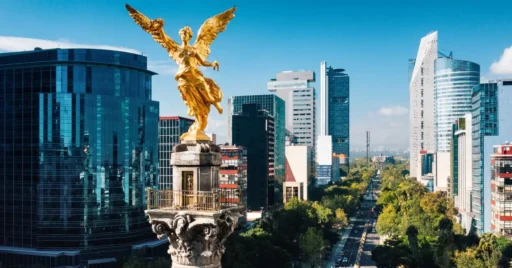
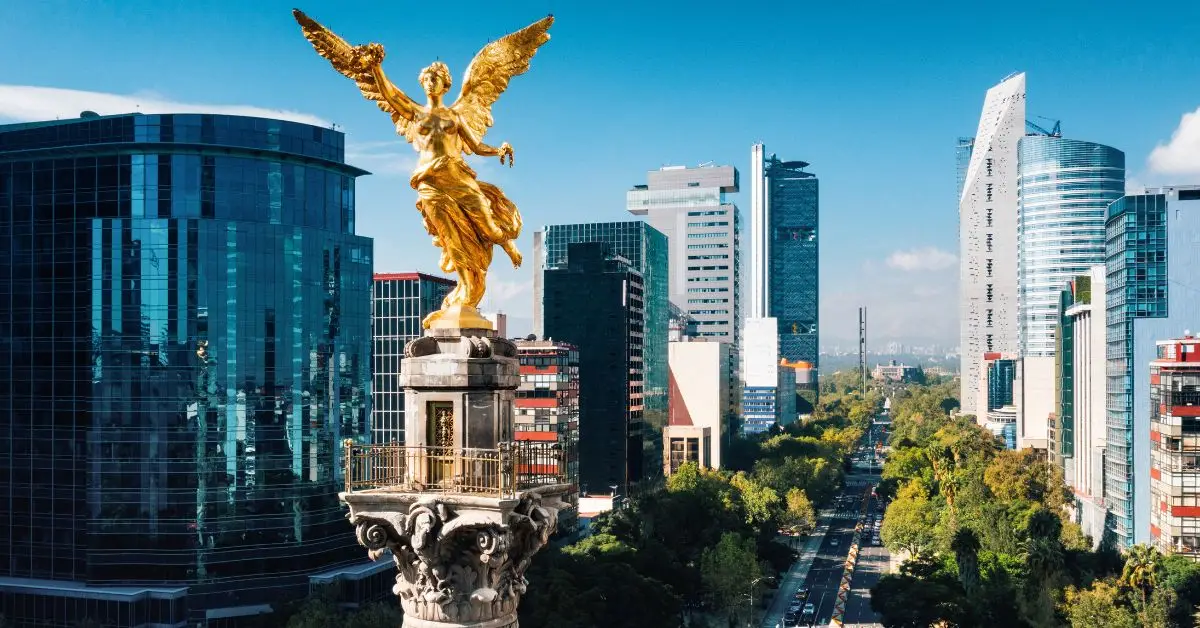
Paseo de la Reforma is the city’s backbone. Walking it feels like turning the pages of a book full of symbols: the Angel of Independence rises imposingly between cars and trucks; further along, the Hunter Diana stares out defiantly from her fountain. And between monuments, life never stops for a second. The best experience comes on Sundays, when traffic is closed and bicycles, roller skates, and strollers take over the asphalt. Reforma transforms into a giant walkway, a kind of linear park where families, runners, and curious passersby share the space. There’s music, fruit stands, happy dogs running free — one of those moments when the city breathes differently, as if it’s finally taking a well-deserved break.
Chapultepec Forest
A genuine escape from the urban chaos. It’s one of the largest urban parks in the world, and I’m not exaggerating when I say you can spend an entire day there. From rowing on the lake to getting lost among centuries-old trees, everything feels lighter in Chapultepec.
Chapultepec Castle was one of my favorite stops. Climbing up to it and looking out over the city from above, with the wind running through the gardens and terraces, is one of those experiences that sticks with you.
Colonia Roma
Roma has something that’s hard to explain but impossible to miss the moment you step into it. It’s a neighborhood that wins you over with its mix of old houses, tall trees, and an unusual calm in the middle of the city. There’s a creative energy floating in the air, as if everyone around is writing a screenplay, painting something, or dreaming out loud.
The terrace cafés are part of the landscape, as are the design shops with windows that make you want to step inside even when you don’t need anything. The parks are like small green refuges where dogs run free and people sit down to simply exist. Walking these streets means switching gears, slowing down, and experiencing the city from a more intimate, relaxed place — almost European, but with a chilango heart.
Colonia Condesa
Right next to Roma is La Condesa, and while they share that modern, laid-back vibe, Condesa has its own style. It’s a neighborhood with a bohemian soul where everything seems to flow effortlessly. It’s a great area to wander through without any agenda.
There’s good food on every corner, hidden bars with good music, bakeries you can smell from half a block away. But the best part, without question, are the parks — Mexico Park, Spain Park, Pushkin Park — where you can stretch out on the grass, watch people walk their dogs, or just sit on a bench and watch life go by. Everything here invites you to stay a little longer.
Top museums in Mexico City
Mexico City is a paradise for museum lovers. With more than 150 registered cultural spaces, it’s one of the cities with the most museums in the world. Whether you’re after pre-Hispanic art, modern art, folk art, contemporary art, or themed museums, there’s something here for you. Below are the most outstanding ones — some are genuinely unmissable, especially if it’s your first time in the city.
Anthropology Nathional Museum
Located inside the Chapultepec forest, this museum is a world-class institution. Its architecture is iconic — that enormous concrete canopy suspended over the central courtyard — and its contents are simply overwhelming.
Each room is a journey through the civilizations that inhabited Mexico: Mexica, Maya, Toltec, Zapotec — each has its own space, its key pieces, its narrative. This is a place to explore without rushing. One of my personal favorites, without question.
For me, the Anthropology Museum ranks among the best in the world, and walking through its halls makes you feel small against the vastness of history. Plan on at least half a day and wear comfortable shoes.
Frida Kahlo Museum (Blue House)
Located in Coyoacán, this museum preserves the spirit of Mexico’s most iconic artist. The house where Frida lived with Diego Rivera is kept nearly intact: her bedroom, her kitchen, her studio, her garden — everything tells a story. There are original pieces, clothing, letters, and details that move you.
Buy tickets in advance, as the museum is usually full. The visit is self-guided, but audio guides add a lot to the experience.
Soumaya Museum
Free to enter, this museum is part of the cultural foundation of Carlos Slim. Its modern architecture — a curved facade covered in metallic hexagons — has become one of the defining icons of the new Polanco.
Inside there are over 60,000 pieces, from Rodin sculptures to viceregal art, with works by Dalí, El Greco, and Tintoretto in the mix. The layout can feel overwhelming, but it rewards a slow, unhurried visit — especially if you’re interested in European art.
Modern Art Museum
Also in Chapultepec, this museum holds an excellent collection of 20th-century Mexican art. You’ll find works by Diego Rivera, Remedios Varo, Rufino Tamayo, Leonora Carrington, and many more.
I visited looking for a bit of visual breathing room and was genuinely surprised. The sculpture garden is wonderful — you can sit among trees and contemporary pieces and just rest. It’s not a large museum, so an hour or two is enough.
Tamayo Museum
Right next to the Morden Art Museum, the Tamayo doesn’t go unnoticed. From outside it already imposes with its brutalist architecture — sharp angles and bare concrete, as if warning you that what’s inside isn’t business as usual. And yes, what you find inside isn’t about seeing “pretty things” — it’s about thinking, questioning, feeling a little unsettled (in the best way).
Its temporary exhibitions bring some of the best contemporary art, both Mexican and international, and they always manage to surprise. It’s one of those museums that takes risks, that proposes, that sometimes makes you uncomfortable but never leaves you indifferent. Its open, wide spaces let everything breathe too — as if even art needs room to stretch. Easily one of the boldest and most refreshing in the city.
Franz Mayer Museum
A genuinely surprising museum. It always has interesting exhibitions and a beautiful interior courtyard that’s perfect for escaping the noise of the center. Its focus is decorative arts and design, with pieces ranging from antique clocks to furniture, textiles, and photography.
I loved the tranquility of it. The colonial building, the collection, and the courtyard café make it a real refuge in the middle of downtown’s chaos.
Templo Mayor Museum
Right next to the Zócalo, this museum completes the visit to the Templo Mayor ruins. It’s essential for understanding pre-Hispanic Mexico from its very epicenter. The collection of sculptures, ceremonial objects, and everyday items from Mexica culture is excellent. The contrast between this museum and the Cathedral next door makes you feel genuinely caught between two worlds.
University Museum of Contemporary Art (MUAC)
In the middle of Ciudad Universitaria, hidden among gardens and modernist buildings, you’ll find the MUAC. It doesn’t show up in the quick tourist guides, but if you make the trip out there, the experience is completely worth it. It’s one of the most relevant spaces for contemporary art in Mexico, and you can feel that in every corner.
The building itself is a gem — clean, imposing, with that mix of austerity and elegance that needs no ornamentation. And what’s inside always leaves you thinking. The exhibitions are carefully curated, powerful, and often tackle subjects that shake you up. This isn’t a museum to kill time — it’s one that invites you to stay, to read every label, to talk about it afterward. Going to the MUAC means stepping slightly off the tourist map and into a place where culture is experienced with real intensity.
Which days are museum entry free?
- Sunday: most public museums offer free entry for Mexican nationals and residents.
- Museo Soumaya: free every day.
- Some university museums (like the MUAC): offer free entry on certain days, such as Tuesday or Wednesday.
- Frida Kahlo Museum and other private museums: maintain fixed admission prices, though they sometimes run promotions during the low season.
Recommended tours and activities
Mexico City isn’t just about museums and monuments, impressive as those are. It’s a city that breathes, that moves, that throws unexpected plans at you constantly. And the best experiences don’t stop at the center or Coyoacán — there’s plenty to do both inside and outside the city limits.
From exploring archaeological zones that seem to belong to another era, to getting lost in markets full of flavors and smells that dizzy you in the best way — this city delivers everything. You can watch a traditional performance that gives you goosebumps, or dive into a food tour that leaves you happily exhausted. If you really want to squeeze the most out of your visit, these are the activities you can’t skip.
Teotihuacán
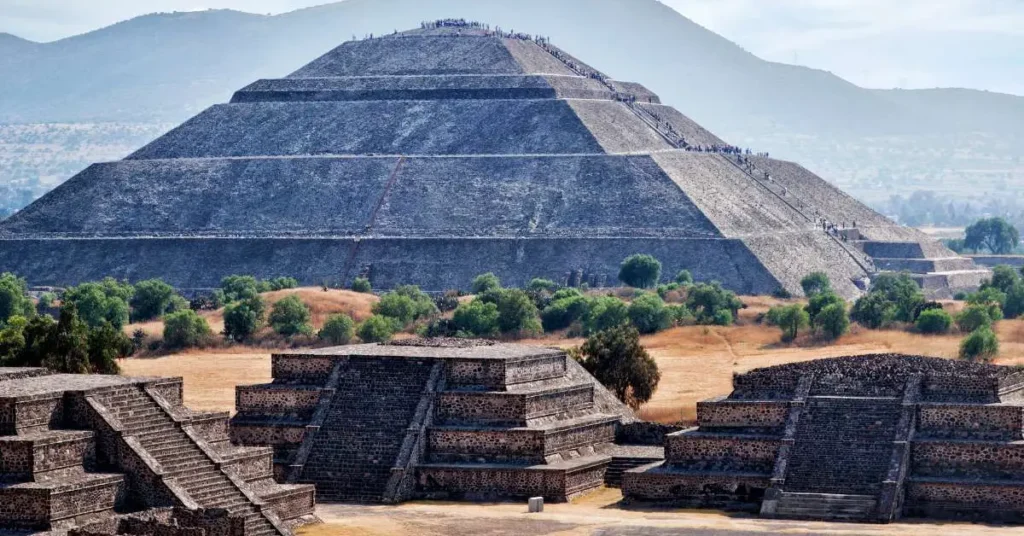
One of the most impressive excursions you can take from the capital. Just an hour from the center, the majestic Pyramids of the Sun and Moon stand in a city that was once one of the most powerful in the pre-Hispanic world.
Climbing the pyramids (or floating over them in a hot air balloon, if you’re feeling adventurous) is extraordinary and connects you with Mexico’s pre-Hispanic history in a very particular way. The feeling of walking along the Avenue of the Dead, imagining ancient rituals, and looking out over the landscape from above is something you don’t forget.
Most tours leave in the morning and combine transportation, a guide, and free exploration time. Some include typical food or stops at obsidian and pulque workshops.
Xochimilco
Taking a trajinera through the canals of Xochimilco is one of the oldest and most colorful traditions the city has to offer. The trajineras — decorated with names and flowers — glide through canals surrounded by chinampas, the ancient floating agricultural islands.
You can go with friends, bring food and drinks, hire mariachis, or just let yourself drift. It’s a blend of history, nature, and popular culture at its most vivid. Some tours also include visits to greenhouses, markets, and less touristy ecological areas.
Wrestling and mezcal
Going to Arena México to watch wrestling is one of the most authentic experiences the city offers. It doesn’t matter if you know who the wrestlers are — the masked fighters become heroes and villains in a battle of jumps, shouts, and drama that you feel in your whole body. The crowd’s energy is contagious: you’ll find yourself yelling, laughing, and clapping without even realizing it.
And if you want the full package, do the wrestling and mezcal combo. There are nighttime tours that pick you up, explain everything, pour you a mezcal to warm up, and take you straight to enjoy the show with great seats. It’s a perfect blend of pop culture, folklore, and pure chilango chaos — one of those things you simply can’t understand until you’ve lived it.
Coyoacán
Although Coyoacán was originally a village near Mexico City, the city has long since absorbed it. That said, it’s not close to the center. It’s ideal for spending half a day or more. Some tours take you through its market, Frida Kahlo’s Blue House, the Leon Trotsky Museum, San Juan Bautista church, and its lively plazas. You can easily do it on your own — it’s perfectly safe — but going with a guide helps you better understand the neighborhood’s historical and artistic context.
Getting around the city
- The metro is fast and cheap, though it can get packed during rush hour.
- Uber works really well, it’s completely safe, and it’s affordable. Personally, it’s the option I use most.
- There are also public bikes (Ecobici), the metrobús, and scooters in areas like Roma. Keep in mind that Mexico City traffic is chaotic, so think carefully about any mode of transport that puts you behind the wheel.
- Walking is great within the same neighborhood — it’s the best way to soak up the city’s spirit.
Getting from the airport to the city center
Benito Juárez International Airport is, on paper, fairly close to the center — about 10 to 12 kilometers — but Mexico City traffic is chaotic and that distance can take a long time to cover. Fortunately, getting around from there is easy if you know how. Here are the clearest options so you can choose the one that fits your arrival time, your patience, and how much luggage you’re carrying.
Authorized taxi: First golden rule: ignore anyone who approaches you outside offering “a good price.” Safe taxis are the ones registered inside the airport (Porto Taxi, Sitio 300, Nueva Imagen). They have booths inside the terminal, you pay upfront based on your destination, and that’s it. You get in, relax, and there are no surprises. To the center you’ll pay between 300 and 400 pesos, and the ride takes anywhere from 20 to 40 minutes depending on traffic.
Uber, Didi, Cabify, or Beat: If you prefer to request a car through an app, these work well. They have designated pickup zones, so no guesswork. Sometimes cheaper than the airport taxi, though if you arrive during peak hours, expect a surge. Normal fare runs between 180 and 300 pesos. Same travel time as a traditional taxi.
Metrobús Line 4: This option is for light packers who don’t mind public transport. It departs from both Terminal 1 and Terminal 2 and takes you straight to the Historic Center, stopping at key spots like Bellas Artes and Hidalgo. It costs 30 pesos and takes between 40 and 50 minutes depending on traffic. Runs from 4:30am to midnight. A solid choice if you’re not dragging a big suitcase.
Metro (Line 5, Terminal Aérea station): The cheapest option at 5 pesos. But let’s be honest — it’s not for everyone. If it’s your first time, you have large luggage, or you’re not confident navigating the city, skip it. You’ll need to walk, transfer between lines, and it’s almost always crowded. It can take an hour or more to reach the center, so factor that in.
Private transfer or hotel shuttle: If you want to arrive and have someone waiting with your name on a sign, many hotels (especially mid-range and upscale) offer transfers. You can also book private cars in advance. Prices vary by vehicle type, but budget between 400 and 800 pesos. Ideal if you arrive tired, with family, or simply don’t want to deal with it.
Best areas to stay in Mexico City
Choosing the right area to stay in Mexico City can make the difference between a good trip and a great one. Given its size, some planning is essential — not all neighborhoods are created equal, and they’re not all equally connected. Here are the most recommended areas based on what you’re looking for, with their vibe, pros, and what to expect from each.
Historic Center
Ideal for: first-time visitors who want the most tourist-heavy attractions within walking distance.
Staying in the Historic Center means being right where everything happens. From your hotel you can walk out and, in no time, find yourself in front of the Zócalo, Fine Arts, the Templo Mayor, or theTile House. The accommodation options are wide: from simple hostels to well-equipped boutique hotels, plus the major chains for those who prefer something familiar.
During the day there’s movement everywhere — office workers, tourists, vendors, students, the city in its most alive form. But at night the pace drops significantly and some streets feel quiet, so it’s worth checking exactly which street your accommodation is on. If history, museums, and spending your days walking among centuries-old buildings is your thing, this is your ideal base.
Roma Norte
Ideal for: people who want art, great food, design, and a bohemian energy.
Roma is, no question, one of my favorite areas to stay. Terrace cafés that invite you to sit for hours, restaurants ranging from neighborhood classics to contemporary kitchens, design shops that look like they came straight out of Pinterest, and parks like Mexico Park and Spain Park where something is always happening — dogs running, people doing yoga, street musicians, couples stretched out on the grass.
It’s also very walkable and feels safe. There’s a great range of accommodation: boutique hotels full of character, cool apartments to rent for a few days, hostels with good energy, and several pet-friendly options. If you’re after a place that’s relaxed but stylish, where every street has its own personality, this neighborhood will win you over.
Condesa
Ideal for: people who want calm, lots of green space, a low-key nightlife, and good connections throughout the city.
La Condesa, right next to Roma, has that European neighborhood charm: tree-lined streets, wide sidewalks, parks that invite you to walk without rushing, and terraces where coffee gets taken slowly. It’s safe, relaxed, perfect for walking at any hour of the day, with that cosmopolitan touch that blends local and international effortlessly.
You’ll find lodging for every taste here: personality-filled boutique hotels, well-maintained Airbnbs, quiet hostels, and many pet-friendly spots. Cafés are everywhere, alongside restaurants with vegetarian, vegan, or just plain delicious options. A great area for couples, young families, or travelers who want a break without disconnecting from the action.
Coyoacán
Ideal for: travelers who prefer calm, seek living history, and want a genuine connection to culture.
Coyoacán is unlike any other corner of the city. It has the soul of a village and a rhythm all its own. You walk its cobblestone streets and everything slows down immediately. The plazas, the trees, the high-ceilinged old houses — even the air feels different. There’s no rush here, just time to sit on a bench and watch the afternoon fade, or listen to a singer playing on a corner.
Frida Kahlo’s Casa Azul is the neighborhood’s most famous landmark, sure, but it’s not the only thing. Everything in Coyoacán seems to tell stories — the markets where the smell of coffee mixes with tamales, the old bookshops with someone else’s underlined notes. Although it’s a bit removed from the center, the journey is worth every minute.
If you’re looking for accommodation with character — nothing generic — you’ll find it here. Colonial houses converted into small hotels full of detail, Airbnbs with plant-filled patios and quiet nights. Coyoacán is for people who want to fall asleep to crickets, not traffic.
Polanco
Ideal for: business travelers, people who want comfort without limits, or anyone looking to treat themselves well.
Polanco is the city’s most polished, elegant side. Everything here gleams: five-star (or better) hotels, restaurants that show up on international lists, and shops where seeing the names in the windows won’t raise an eyebrow if you have a black card.
The area is impeccable — clean, safe, very orderly. It’s where embassies, executives, high-budget tourists, and locals who know the territory well all cross paths. Very close by you’ll find the Museo Soumaya with its brilliant architecture, the Acuario Inbursa, and the Museo Jumex with top-tier contemporary exhibitions.
Keep in mind that it is a bubble. If you’re looking to feel the more street-level side of the city — the taco stands and markets with soul — you won’t find that here. But if you want total comfort, zero stress, and impeccable service, Polanco delivers, bow and all.
Reforma / Juárez / Cuauhtémoc area
Ideal for: people visiting on business who also want to do some sightseeing and move easily across the city.
The neighborhoods close to Paseo de la Reforma — like Cuauhtémoc, Juárez, or San Rafael — offer a very practical mix: you’re near offices, attractions are around the corner, and public transport connections are good. They work equally well whether you arrive in a suit or with a backpack.
Accommodation here covers everything: chain hotels for executives, more relaxed independent-style spots, and apartments to rent for extra freedom. The variety is part of the appeal.
From here you can walk to the Bosque de Chapultepec, swing by the Angel of Independence, or even take a stroll along Reforma on a Sunday, when it closes to traffic and fills up with cyclists, skaters, and strolling families. It’s an area that doesn’t shout “tourism” but has everything nearby.
Things to do with kids or as a family in Mexico City
Traveling with kids to Mexico City can be a lot of fun. This city has a special talent for surprising younger visitors and keeping them captivated. There are museums that are nothing like the typical kind — here you touch, play, and experiment — enormous green spaces where they can run freely, and cultural activities that manage to teach without boring anyone. And the best part is that everything is designed to include the whole family, not just keep the kids busy while the adults wait. From learning about the ancient Mexica through hands-on play, to seeing dolphins, planets, or giant insects, there’s always something to do. Here’s a selection of the best places and activities for families with kids in this lively city.
Papalote Kids Museum
An absolute classic if you’re traveling with children. This fully interactive museum in Chapultepec has areas for touching, building, playing, and experimenting. There are sections covering science, the human body, art, the environment, and even virtual reality.
Plan on half a full day here. It also has an IMAX theater, cafeteria, picnic area, and age-adapted zones.
Inbursa Aquarium
Located in the Polanco area, it’s one of the most modern aquariums in Latin America. It has several underground galleries and more than 300 species, from tropical fish to penguins, jellyfish, sharks, and rays.
Very well organized, educational, and with a gift shop and complementary activity area. If you have time, pair it with a visit to the Museo Soumaya, right across the street.
Chapultepec Zoo
It’s free and located inside the Bosque de Chapultepec. It houses more than 200 species, including giant pandas, lions, elephants, and reptiles. Some areas could use updating, but it remains an excellent outdoor family plan.
Chapultepec forest in general is a gem for kids. You can rent bikes, do yoga, row on the lake, or just stretch out on the grass and watch the world go by. There are also picnic spots, playgrounds, and spontaneous performances.
Chapultepec Castle
At first glance you might think the Chapultepec Castle is more of an adults-only thing, but many kids absolutely love it. It has that fairy-tale quality: a real castle, perched on a hill, with ancient rooms, stained glass windows, and elegant furniture that look pulled from a movie. And if your kid is into stories of princes, battles, or cloaked heroes — like the Hero Kids — there’s plenty here to spark their imagination.
Getting there is already part of the plan. The climb through the forest is a mini adventure in itself, surrounded by trees with squirrels darting about and views opening up as you go. For many children, just that walk is a highlight.
Chapultepec small train
This small train that tours the Chapultepec forest is a lifesaver when you’re with little kids. Because yes, walking through the whole park sounds wonderful — until the little ones say they can’t take another step. That’s when this rail tour saves the day.
It’s a relaxed ride where kids get excited just from climbing aboard, and parents appreciate not having to carry backpacks, sweaters, snacks, and children all at once. It goes slowly, makes a panoramic loop through the forest, and along the way shares fun facts about the park — some of them genuinely surprising. Comfortable, easy, and everyone ends up happy. Sometimes the simplest things work best.
Bicentennial Park
This park doesn’t usually show up in tourist guides, which is exactly what makes it a find for families. In the north of the city, it has everything you need for a relaxed day out: wide stretches of grass for a picnic blanket, playgrounds, bike paths, botanical gardens, and even a skate zone for the more energetic kids.
Because it’s not particularly famous, it doesn’t get as crowded as more central spots. There’s plenty of space, the atmosphere is very local, and you can let the kids roam without hovering over them every second. A perfect place to take a nap under a tree or spend an afternoon without watching the clock.
Theater for children
Several companies and venues are dedicated to children’s theater, including the Centro Cultural del Bosque, the Teatro Helénico, and temporary events at La Titería in Coyoacán. These are fun, educational, and age-appropriate cultural experiences.
KidZania Santa Fe
KidZania is like a parallel universe built for children. A miniature city where they’re in charge and everything is designed for them to play at being grown-ups: firefighters putting out fires, doctors in surgery, chefs cooking their own meal, or pilots at the controls of a plane — all with uniforms, realistic settings, and a system of “work” and “pay” that makes them feel important.
Aimed at kids between 4 and 12, and while adults don’t participate in the activities, watching their faces while they “work” is part of the show. Safe, well organized, and it pulls off something difficult: making learning feel like fun. Book ahead for weekends or school holidays — it fills up fast.
Six Flags México
If your kids are teenagers or you’re looking for adrenaline, this amusement park in the south of the city is the place. Roller coasters, rides, shows, and fair food make it a full-day plan.
As you can see, Mexico City is so vast it really does have something for everyone. The key is to plan a little in advance so you can make the most of every day.