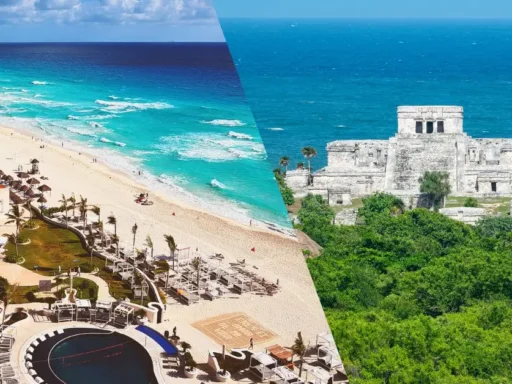
When people talk about the Mexican Caribbean, the same names always come up: Cancún, Playa del Carmen… the usual. But right across from the Riviera Maya, there’s another place that offers something different: Cozumel. You won’t find massive resorts or crowds of tourists here. Cozumel operates on a different frequency. It’s ideal if you’re into diving or snorkeling, but also if you prefer to move around without all the noise — at a slower pace, with a more authentic feel. This isn’t a place built to impress you quickly. It’s one that rewards you for sticking around.
Why Cozumel should be on your list
The answer is simple: Cozumel has it all. Pristine beaches, turquoise waters, a rich local culture, and access to some of the most impressive coral reefs in the world. I still remember arriving and being stopped in my tracks by the clarity of the water and the sheer scale of the reef — one of the largest on the planet.
Cozumel is also a great fit for those who want something different from the typical non-stop party scene. The pace here is different. There’s a calm to the place that stands in sharp contrast to the constant buzz of somewhere like Cancún or Tulum.
What to do in Cozumel: experiences you can’t miss
Diving and snorkeling in the second largest reef in the world
Cozumel is part of the Mesoamerican Reef System, the second largest on the planet. Iconic sites like Palancar, Colombia, Santa Rosa Wall, and Punta Sur are world-renowned for their marine biodiversity and underwater caverns.
Divers and snorkelers will find a genuine paradise here. Getting in the water, you come across an incredible variety of marine life — colorful fish, corals that seem to glow in the sunlight. Even if you’ve never dived before, there are certified schools offering introductory courses for beginners, or you can opt for a glass-bottom boat tour or guided snorkel trip.
Relaxing at beaches like El Cielo and El Cielito
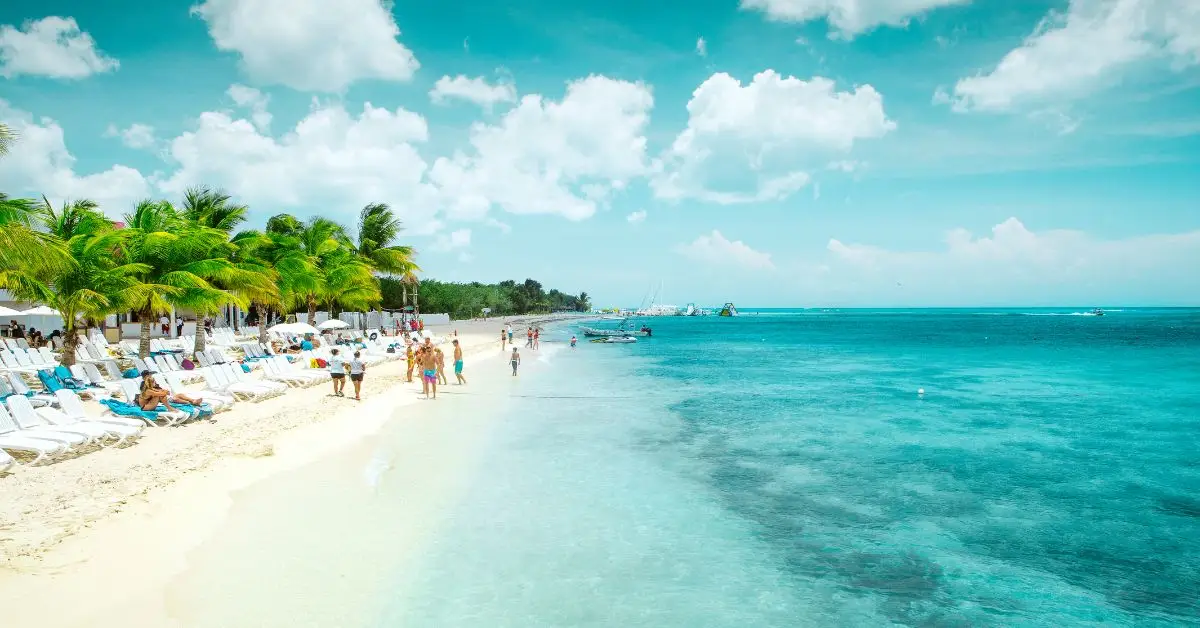
Cozumel’s beaches are the kind you have to see to believe. The whole island is surrounded by a spectacular coastline, but some spots really stand out. El Cielo, for example, is famous for its seabed covered in starfish — like someone emptied a bucket of orange shapes onto white sand. Right next door is El Cielito, with calm, shallow water where you can float undisturbed or stretch out under a palm tree without feeling like you’re in a postcard.
And if you’re after something less touristy, there are solid options. Playa Palancar, Punta Morena, and Chen Río have a different energy: fewer people, more space, and an atmosphere that still feels genuinely local. Perfect for a lazy afternoon with the sound of the sea and nobody else’s music bleeding into yours.
Getting around the island by scooter or bicycle
One of the best ways to explore Cozumel — and skip the typical organized tours — is to rent a scooter or a bike. The island has a road that loops all the way around, so you can stop wherever you feel like it: empty beaches, lookouts with views over the Caribbean, or restaurants that aren’t on any map but turn out to be little gems.
Moving at your own pace changes the whole experience. You’re not dependent on anyone, not rushing to keep up with a group, and you stumble onto quiet corners you’d never find otherwise. You might suddenly come across a little beach bar with hammocks strung between palm trees, where the only sounds are the wind and the waves. Those unplanned moments are often the best ones.
Visiting Punta Sur Park
At the southern tip of Cozumel, near the end of the road, you’ll find Punta Sur Eco Beach Park — a protected area where nature runs the show. The place has a bit of everything: a historic lighthouse (Faro Celarain), a lagoon full of crocodiles, birdwatching trails, and picture-perfect beaches.
If you climb the lighthouse, the view is breathtaking: jungle, sea, and sky all at once. There are also boat tours through Colombia Lagoon, where the silence is only broken by the splash of a bird or the ripple of something moving in the water. It’s one of those places that forces you to slow down, put the phone away, and just be present. A perfect spot to spend a day without watching the clock.
Exploring caves and cenotes
Cozumel isn’t packed with cenotes the way other parts of the peninsula are, but the few it has are worth it — especially if you enjoy underground exploration. The best known are Cenote Aerolito and the caves at Punta Sur. The latter are part of fairly technical cavern diving routes, suitable only for experienced divers.
If you’re into adventure tourism and don’t mind venturing into the unknown, there are guided tours that take you to these spots. They’re not easy to find and they’re not packed with people — which is precisely what makes them special. These are places that still have that raw, mysterious quality that’s getting harder and harder to come by.
Sport fishing and catamaran rides
If the sea is your thing but swimming isn’t, there’s still plenty to do. From March to July, you can head out on a sport fishing tour — prime season for species like mahi-mahi, sailfish, and tuna. It’s more than just fishing: it’s hours out on the open water, rocking gently with the horizon stretching out in all directions.
If you’d rather keep things relaxed, a sunset catamaran ride is a great option. Music, something to drink, good company, and that Caribbean sky slowly turning orange as the sun goes down.
Exploring Cozumel island: much more than the sea
Historic center and local food
San Miguel de Cozumel, the heart of the island, has a relaxed energy that makes you feel at home from the moment you arrive. In the historic center, among simple streets and buildings with history, you’ll find restaurants serving local food without pretension but with plenty of flavor. There’s also a market where you can pick up handmade souvenirs, fresh fruit, or a snack to take with you.
Walking along the pier is basically mandatory. The sea on one side, cruise ships looming like floating buildings, and on the other side, craft shops, small restaurants serving fried fish done right, and cafés where you can sit with no particular agenda, just watching island life go by. All of it at that slow rhythm that, after a while, starts to rub off on you.
Local culture and hospitality
Cozumel’s history is alive in its Mayan heritage. A good example is San Gervasio, an archaeological site that was once a ceremonial center dedicated to Ixchel, the goddess of the moon, love, and fertility. Walking through it feels like stepping into another era, surrounded by jungle and silence.
The people on the island are also part of that living history. They’re warm, straightforward, and genuinely happy to share what’s theirs — whether that’s a story, an explanation of a local dish, or an invitation to join a local activity. There are festivals, traditional dances, and markets selling handmade goods. It’s not manufactured tourism — it’s real culture, right there in front of you, ready to be discovered and respected.
Cozumel museum
If you want to understand the island beyond what’s visible on the surface, the Cozumel Island Museum is a worthwhile stop. It covers the Mayan history of the island, how it evolved over time into a tourist destination, and dives into the remarkable marine life surrounding Cozumel — all with context and detail, without overwhelming you.
It’s right near the pier, so easy to reach on foot. Beyond the permanent exhibition, they usually have temporary shows and family activities, so whether you’re traveling solo, as a couple, or with kids, there’s always something to discover. It’s a good way to connect with the place on a deeper level than just the scenery.
Artisanal chocolate and tequila making
For something a bit different, consider joining a chocolate or tequila tour where they walk you through the artisanal production process. At places like Kaokao Chocolate Factory or Discover Mexico Park, you can take part in tastings, workshops, and learn more about the Mexican origins of these iconic products.
These tours also include interesting cultural background — a solid option for those who want more than just sun and beach.
ATV safari
If you want to add some action to the trip, an ATV safari along Cozumel’s dirt tracks might be exactly what you need. You head out through jungle paths full of mud, rocks, and dense vegetation, and end up at hidden cenotes, caves, or beaches where almost nobody else goes. It’s got an adrenaline edge, but also that sense of exploration that feels more real than any packaged tour.
Ideal if you don’t mind getting dirty, going off the beaten path, and seeing a rawer, less filtered side of the island.
Things to know before visiting Cozumel
How to get there
To reach Cozumel, you take a ferry from Playa del Carmen. The crossing is scenic and offers good views of the sea, though it does take a bit of time.
If you’re planning to visit nearby highlights like Chichén Itzá or Tulum, I wouldn’t recommend using Cozumel as your base — the back-and-forth on the ferry gets old quickly. Better to split your trip: spend a few days on the mainland covering those visits, then head to Cozumel for a few days of proper relaxation.
Costs and small details to keep in mind
Some travelers have noticed that prices in Cozumel can vary depending on where you’re from, which can lead to some frustrating moments when booking tours or packages. To avoid any unpleasant surprises, the best approach is to compare options carefully and, when possible, book directly with well-established, certified local operators. That way you sidestep overcharging and support the local economy at the same time.
The sargassum problem
In recent years, Cozumel — like the rest of the Riviera Maya — has dealt with sargassum seaweed, which can seriously affect the beach experience. The island’s geography does give it some protection, and it tends to receive less sargassum than other parts of the Mexican Caribbean coast, particularly the eastern side of the mainland. Even so, it’s worth checking which months are worst and trying to plan around them.
The impact of mass tourism on Cozumel
With the surge in international tourism, Cozumel has seen a sharp increase in cruise ship arrivals, mass excursions, and resort development. While this has brought economic growth, it’s also created problems worth keeping in mind:
- Urban overcrowding: Cozumel is considered one of the most densely visited destinations in the world. This has led to congestion, a rising cost of living for residents, and the degradation of cultural and natural sites.
- Pressure on the reefs: The growing number of visitors without adequate controls has taken its toll on Cozumel’s reefs. In several areas the damage is already visible: direct contact with coral, the use of conventional sunscreen, and the expansion of hotels and other construction have all disrupted the natural balance. It’s not subtle damage — it’s there, and it’s the result of blurry lines between tourism and conservation.
- Rising prices and gentrification: The tourism boom has also had social consequences. Mass tourism has driven up prices, hitting residents hard. Many locals have been pushed out of their own neighborhoods because they can no longer afford to stay. Traditional Cozumel is increasingly being squeezed out by a tourism model that prioritizes visitors over community.
- Waste management: The island generates a volume of garbage and wastewater that frequently exceeds its capacity to handle, with a direct impact on the surrounding natural environment.
Fortunately, there are community initiatives and public policies aimed at promoting sustainable tourism. Supporting eco-friendly tours, avoiding extractive operators, and buying local are all ways to help Cozumel hold on to what makes it special.
Final tips for your trip to Cozumel
- Bring cash: many smaller places don’t accept cards.
- Book tours in advance: especially if you’re traveling during high season.
- Rent a scooter or car: to explore the island at your own pace.
- Use biodegradable sunscreen: to protect the reefs.
- Skip the generic excursions: go with local operators for a more authentic experience.
- Respect the ecosystems: don’t touch the coral and don’t take anything from the sea.
Cozumel isn’t just another dot on Mexico’s tourist map. It’s one of those places that changes your rhythm. Maybe it’s the water, so clear it almost doesn’t look real. Or the people, who welcome you without any fuss. Or just that quietness that creeps in slowly, until you realize you haven’t checked the time in hours. Whether you’re underwater, on a deserted beach, or drinking coffee by the malecón, Cozumel leaves something with you. You don’t need big words to describe it. You just have to experience it.
Ready to make the trip and discover Cozumel for yourself? Trust me — you won’t regret it.