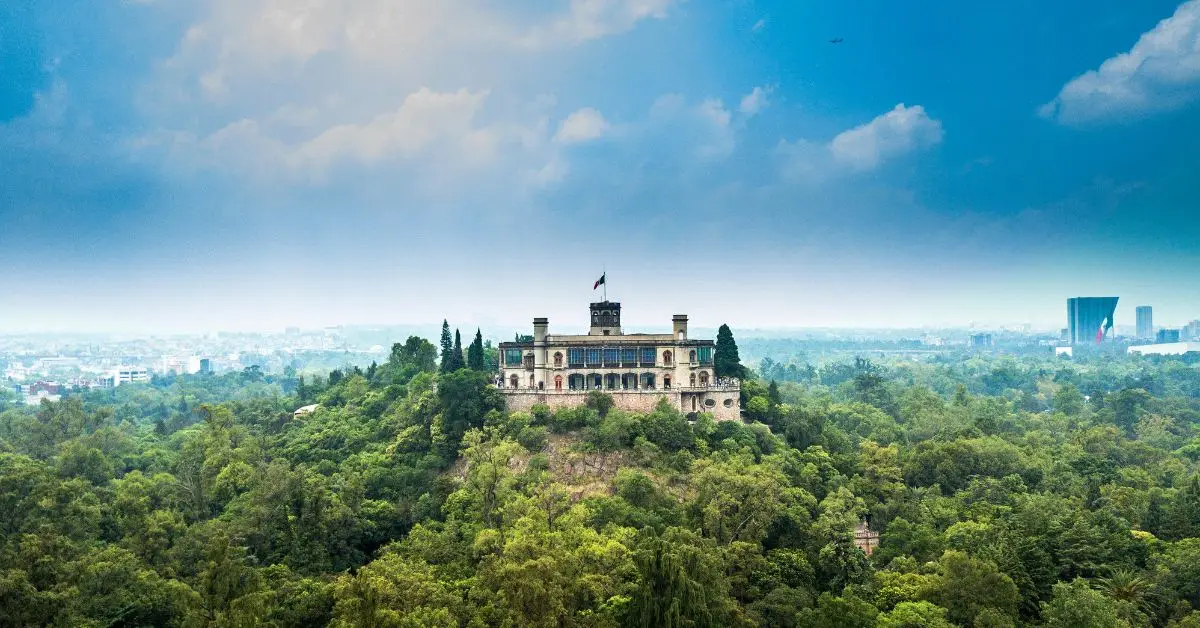
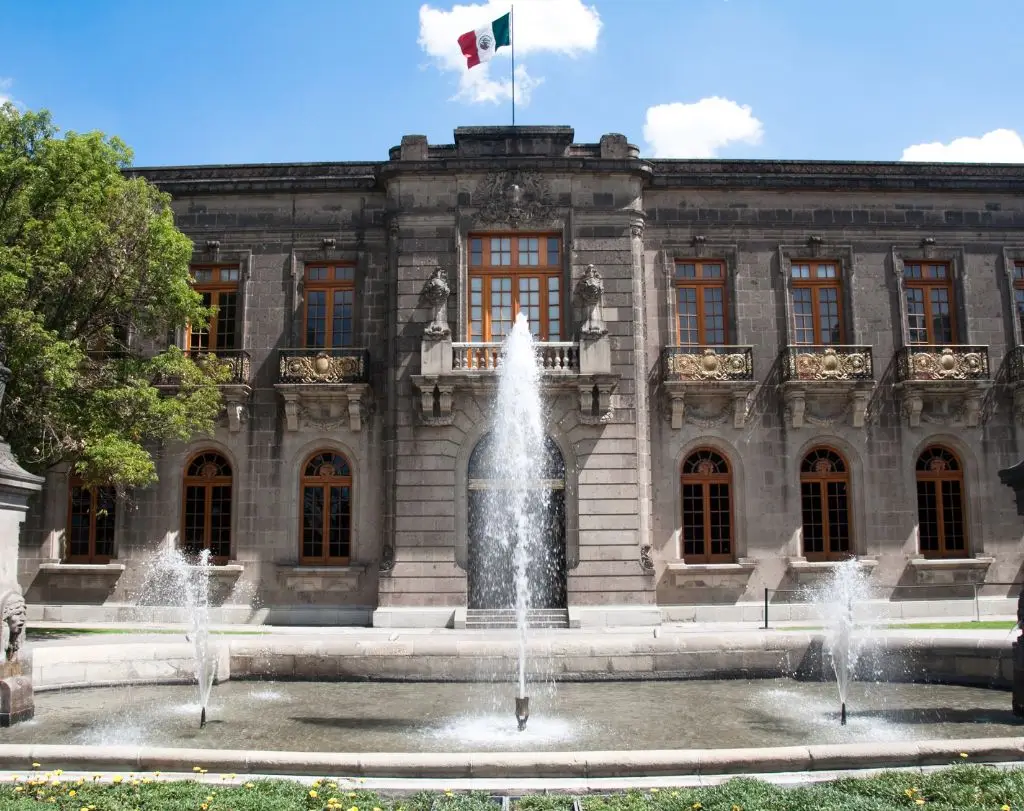
Chapultepec Castle is one of the best things you can visit in Mexico City. The castle has impressive architecture, a ton of history, and offers breathtaking views of the city. It sits atop a hill right in the middle of Chapultepec Park, and it’s a key part of Mexico’s history.
This place has seen it all: it was home to emperors, the stage for battles, and today it houses the National History Museum. So whether you’re into Mexican history or just want to explore one of the country’s most iconic spots, this castle has to be on your itinerary.
Chapultepec Castle: nature and breathtaking views
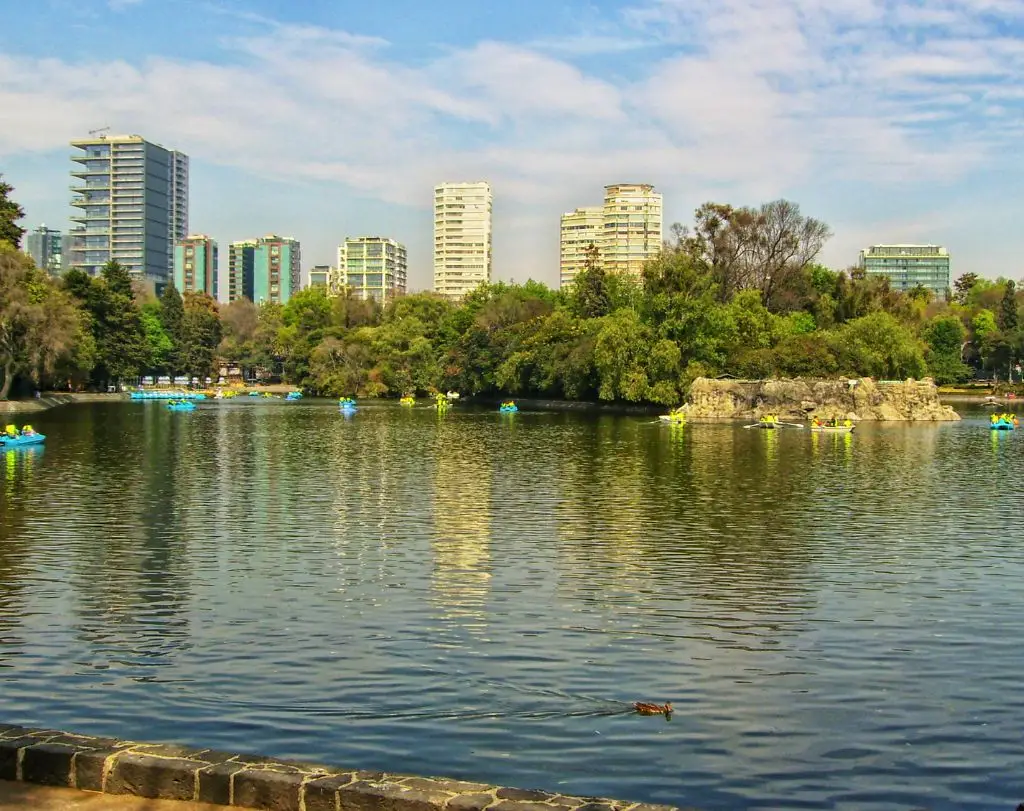
This castle has the privilege of being surrounded by one of the largest urban parks in the world: Chapultepec Park. The park is a breath of fresh air within the chaos of Mexico City. It’s the perfect place to wander under the shade of enormous trees, enjoy some ice cream, sit on a bench to rest, and soak in the calm.
The walk up to the castle, though short, has its share of difficulty, especially on a hot day. But don’t worry, there’s also a small train that takes you up to the top. It’s perfect if you’re traveling with kids, with older relatives, or if you’d simply rather arrive fresh instead of sweaty.
Once at the top, you can enjoy some of the best views in the city. From the castle’s terraces, the views are spectacular: Paseo de la Reforma stretches out like a great artery between the park and the skyscrapers, showing off a more modern face of the city. That’s when you realize just how immense and vibrant Mexico City is, and understand why this place has witnessed so many important chapters of its history.
History of Chapultepec Castle
This place isn’t just a pretty building on a hill, it’s a silent witness to more than two centuries of Mexican history. Back in the 18th century, someone had the idea of building a rest house for the viceroys. But it turned out the chosen site was so spectacular and the construction so ambitious that the “little house” ended up looking more like a castle. And so it stuck.
Like many things in Mexico, the castle’s fate took several turns. Decades later it became a military school. It was during this stage that the place became a symbol of courage and sacrifice. In 1847, when American troops invaded the country, a group of young cadets gave their lives defending the castle. Today they’re known as the Niños Héroes (Boy Heroes), and their story is still very much alive in the country.
In the mid-19th century, Emperor Maximilian of Habsburg, yes, a European emperor in Mexico, decided to move in along with his wife Carlota. They didn’t hold back: they redesigned the castle to European taste, with furniture brought over from across the ocean, gardens that looked like they were pulled straight from Versailles, and architecture that mixed styles like a design catalog. If you go up to the castle’s upper floors, you can still feel that elegant, somewhat melancholic atmosphere of the failed empire.
After the empire collapsed, the building’s function changed. It became home to several presidents, Porfirio Díaz among them, and survived revolutions, reforms, and transformations. Finally, in 1944, someone had the great idea of turning it into what it is today: the National History Museum. Since then, this castle not only watches over the city from up high, it also holds the memories that helped build it.
Historical halls and exhibits
Touring the National History Museum inside Chapultepec Castle is an immersive and truly enriching experience. It’s surprising how each room guides you through the country’s most important historical moments almost without you noticing: you’re walking past display cases and suddenly you’re in another era, another century, among other voices.
The exhibits are organized by historical period and by theme, so it’s easy to follow a chronological narrative. Some of the most famous rooms include:
- Independence and First Empire: Weapons, uniforms, flags, and key documents from the independence movement are displayed here.
- Republic and Reform: This section shows the birth of Mexico as a republic and the internal conflicts that marked the 19th century.
- Second Mexican Empire: In this room you’ll find portraits of Emperors Maximilian and Carlota, her dresses, everyday objects they used, and more.
- Porfiriato: This room shows the modernization of the country: tower clocks, imported technology, elegant military uniforms, and even a replica of the first streetcars. What stays with me most from this room are the murals, they’re incredible, especially the ones depicting repression in the country.
- Mexican Revolution: My favorite room. Here you’ll find real photographs from the era, spent cartridges, revolutionaries’ hats, and plenty of images of figures like Zapata, Villa, or Madero.
- Modern Mexico: This room focuses on the 20th century. Here you’ll find political propaganda, social progress, everyday objects from the past century, and even a section dedicated to the presidents who lived in the castle before moving to Los Pinos.
The imperial rooms
On the upper floors, the rooms have been preserved just as they were during the time of Emperor Maximilian and his wife Carlota. The decor is quite opulent, with European furniture, gilded chandeliers, and details that help you picture what life was like here at the time.
Walking through these spaces feels like stepping into another era. The gardens, the terraces, the European-influenced columns, everything is so well preserved that it feels like the emperors could walk in at any moment.
Frequently asked questions about Chapultepec Castle
Where is it located and how do you get there?
The castle sits in the First Section of Chapultepec Park, right in the heart of Mexico City. Its main entrance is very close to Paseo de la Reforma, the great tree-lined avenue that runs through much of the city and that you’ve probably seen in postcards or movies.
Exact address: Bosque de Chapultepec I Secc, Miguel Hidalgo, 11100 Mexico City, CDMX.
Getting there is fairly simple. You can walk from Reforma, or take the metro to the Chapultepec station (Line 1, the pink line). There are also several public transport routes that drop you off nearby. If you’re staying in neighborhoods like Polanco, Roma, or Condesa, your best bet is to walk and enjoy the stroll through the park. The path is full of trees, snack stands, and perfect moments for photos or just breathing in some fresh air in the middle of the city.
What days is it open and what are the hours?
It’s open Tuesday through Sunday, from 9:00 am to 5:00 pm. Like all museums in Mexico, it’s closed on Mondays.
What’s the admission price?
Admission costs 90 pesos. It’s free for children under 13, seniors, and students with a valid ID.
It’s free for Mexicans on Sundays. Keep that in mind, since that’s when it gets more crowded.
How much time do you need to visit it?
You’ll need at least 2 to 3 hours, but if you’re a history lover or like stopping to take in the details, you can easily spend half a day. Between the museum, the terraces, the gardens, and the views, time flies. Add in the time you’ll need to walk from the park entrance up to the castle.
Is it worth hiring a guide?
It’s not required, but it is recommended. Many rooms have historical context that’s more enjoyable with a good explanation. Even so, everything is very well labeled in both Spanish and English, so you can enjoy it on your own without any issues.
Can you take photos?
Yes, as long as you don’t use flash. Some rooms may have specific restrictions, but in general you can take photos and record video without any problem (though tripods aren’t allowed).
Is it accessible for people with disabilities?
Yes. There are ramps, elevators, and proper access points. The staff is also very kind if you need assistance.
Tips for enjoying your visit
- Go early, especially on weekends. You’ll avoid lines and the midday heat.
- Wear comfortable shoes, you’ll be doing quite a bit of walking.
- Don’t bring food or drinks: liquids and snacks aren’t allowed inside.
- Hydrate before heading up (or on your way down).
- Make the most of your day and also visit other areas of Chapultepec Park.
Once you finish touring the castle, you can explore Chapultepec Park. It’s huge and has plenty of interesting areas like lakes, fountains, and other nearby museums like the National Museum of Anthropology.
Is it worth visiting Chapultepec Castle?
Definitely yes. This place isn’t just another tourist attraction in Mexico City, it’s a complete experience that connects history, art, and natural beauty in a single visit. Walking through its halls, stepping out onto its terraces, stopping in front of the murals, or simply admiring the view makes you feel part of something much bigger.
Everything here is very well kept. The museum is clean, orderly, and thoughtfully curated. The explanatory signage, in both Spanish and English, means you can tour it on your own without any trouble. That said, if you have the chance to go with a guide, even better. There are so many details, stories, and symbolism that you might miss without someone who knows them well.
A practical tip: wear comfortable shoes. You’ll walk quite a bit, and between the climbs and descents, the last thing you want is sore feet. It’s also a good idea to bring some patience, since on weekends, especially Sundays, it tends to get pretty crowded. Even so, the experience makes up for it many times over. Chapultepec Castle has something special that makes it unforgettable.
If you’re planning a trip to Mexico City, don’t miss the chance to discover this unique place. And if you already know it, you know there’s always something new to see or a different corner to admire.
Would I visit it again? Without a doubt. Every time I go back, I’m just as impressed as the first time. 🌄