Chichén Itzá appears on almost every traveler’s must-see list when visiting the Yucatán Peninsula — and for good reason: it’s a UNESCO World Heritage Site and one of the New Seven Wonders of the World. But if you’ve already been, or if you simply want to skip the crowds and experience something more authentic, there are plenty of Mayan ruins beyond Chichén Itzá that will genuinely surprise you.
In this article I’ll share the best options for exploring the Maya world without the masses — breathtaking landscapes, climbable pyramids, and a whole lot of history still waiting to be discovered. All of it within the Yucatán Peninsula.
Cobá
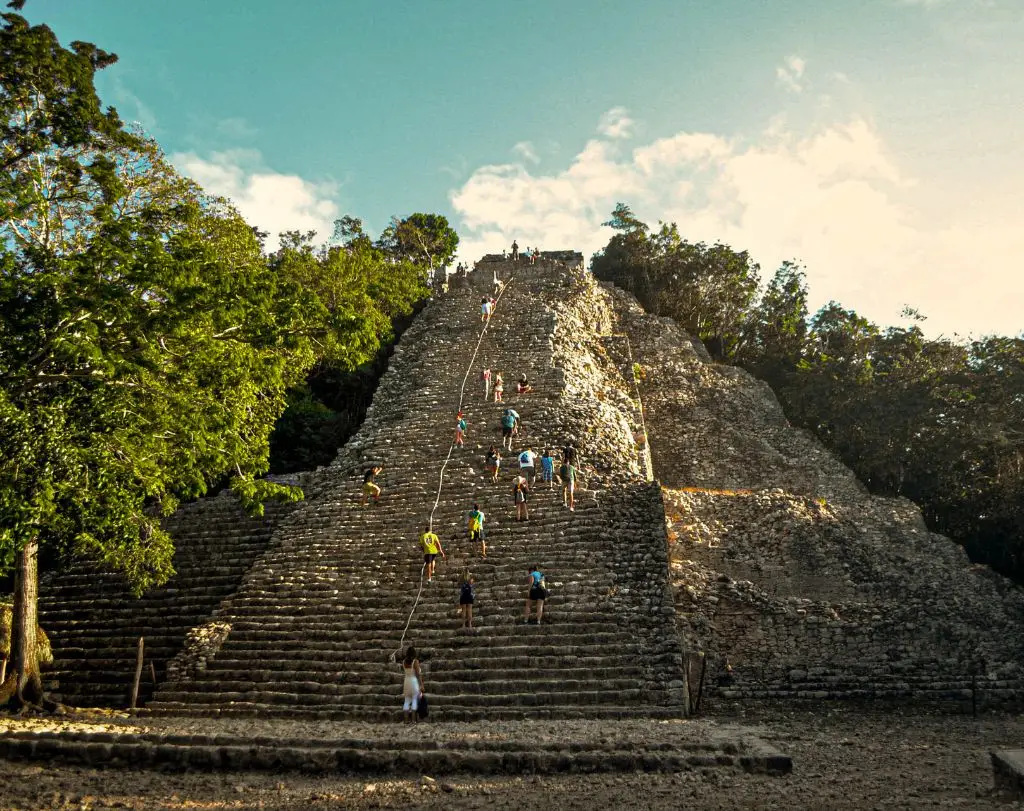
Cobá has something that makes it stand out from the rest, and it’s become one of my favorites. What I love most is that it’s not set in an open field like other famous archaeological sites. Cobá sits deep in the jungle, wrapped in thick vegetation that gives it a sense of mystery and adventure. Walking its trails — under towering trees, with birds calling all around — feels like exploring a hidden world. Nothing like Chichén Itzá, where the sun beats down and everything feels exposed.
One of Cobá’s biggest draws is that you can still climb the main pyramid: Nohoch Mul. It’s the tallest on the entire peninsula, and honestly, climbing it is quite an experience. The steps are uneven and steep, and you hold onto a rope to keep your balance. It gives you that feeling of doing something genuinely out of the ordinary. Yes, the climb is tiring — but what’s waiting at the top is worth it: a sweeping view where the jungle stretches as far as the eye can see.
Cobá is huge, so renting a bike or hopping on a bicycle taxi is a good call if you don’t want to walk the whole thing. On top of being practical, it makes the visit more fun, especially with friends or at a relaxed pace. The shade from the trees helps a lot with the heat, so the whole experience is pretty enjoyable.
Ek Balam
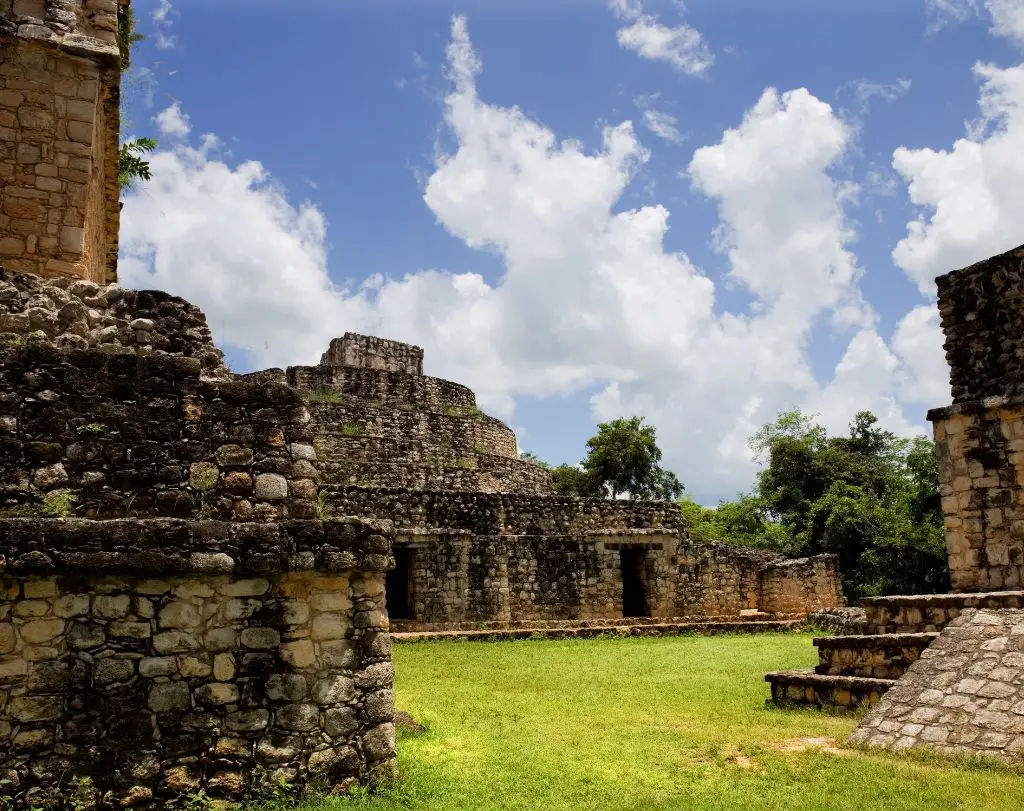
Ek Balam is another site I absolutely love. Though smaller in scale, it has one of the most impressive acropolises I’ve ever visited. What makes it so special is that as you climb, you reach the entrance to an ancient ruler’s tomb, decorated with stucco figures — jaguars, warriors, and other Mayan symbols preserved in remarkable condition.
Several other impressive structures complete the archaeological complex, including the Oval Palace, the Twin Pyramids, the ball court, and the Stucco Platform.
Beyond being a photogenic and peaceful site, getting there early to beat the heat makes a real difference. A bonus: you can pair the visit with a swim at cenote X’Canche, located right next door. There’s nothing better than jumping in after the heat of the ruins.
Uxmal and the Puuc route
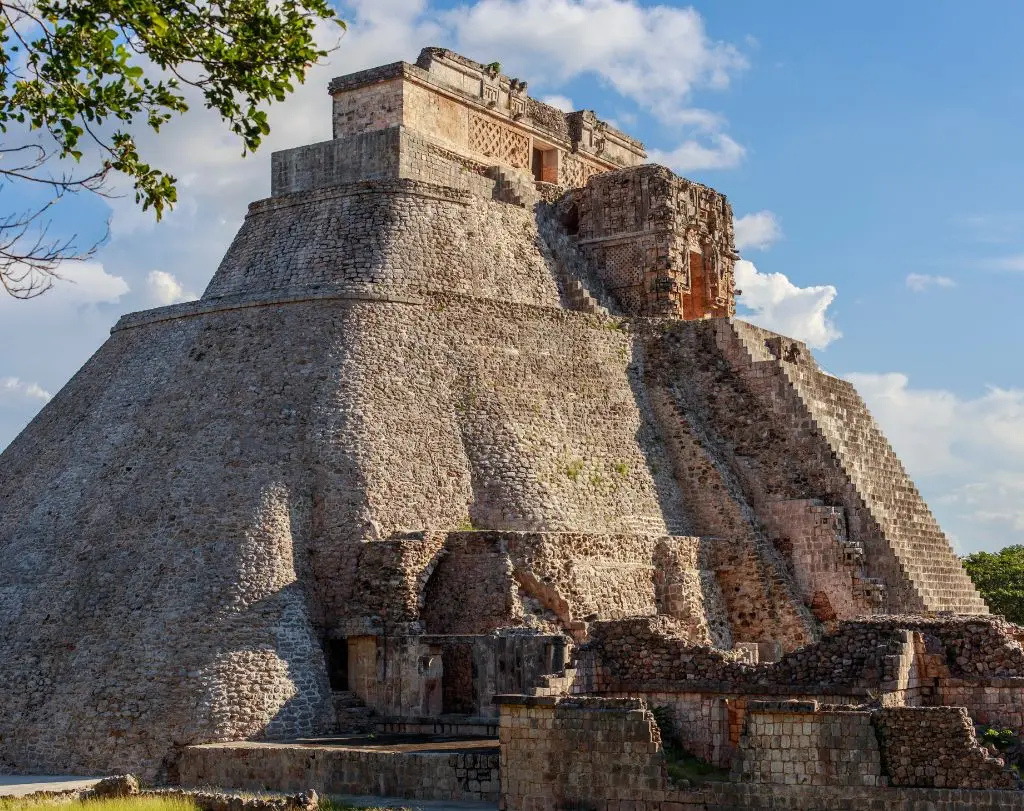
Uxmal has a beauty all its own. For anyone drawn to refined architecture, this is one of the most spectacular sites on the peninsula. The Puuc style dominates every facade, and the Pyramid of the Magician commands attention from every angle.
What I like about Uxmal is that you can take your time. It’s not overrun with crowds, so you can pause and really take in the details — the Chaac masks on the facades of the Nunnery Quadrangle, the sweeping design of the Governor’s Palace. The late-afternoon light gives the whole place a particularly magical quality.
There’s a unique stillness here, almost mystical, that makes the experience feel very different from other sites. Everything seems designed for contemplation.
And there’s more: Uxmal is the first stop on the Puuc route, where you can visit additional Mayan ruins as you push deeper into the jungle and further from the tourist trail. Kabah impresses with its Palace of Masks, covered in faces of the rain god Chaac. Sayil surprises with its three-tiered palace, and Labná has a monumental arch that looks like it came straight off a film set.
Mayapán
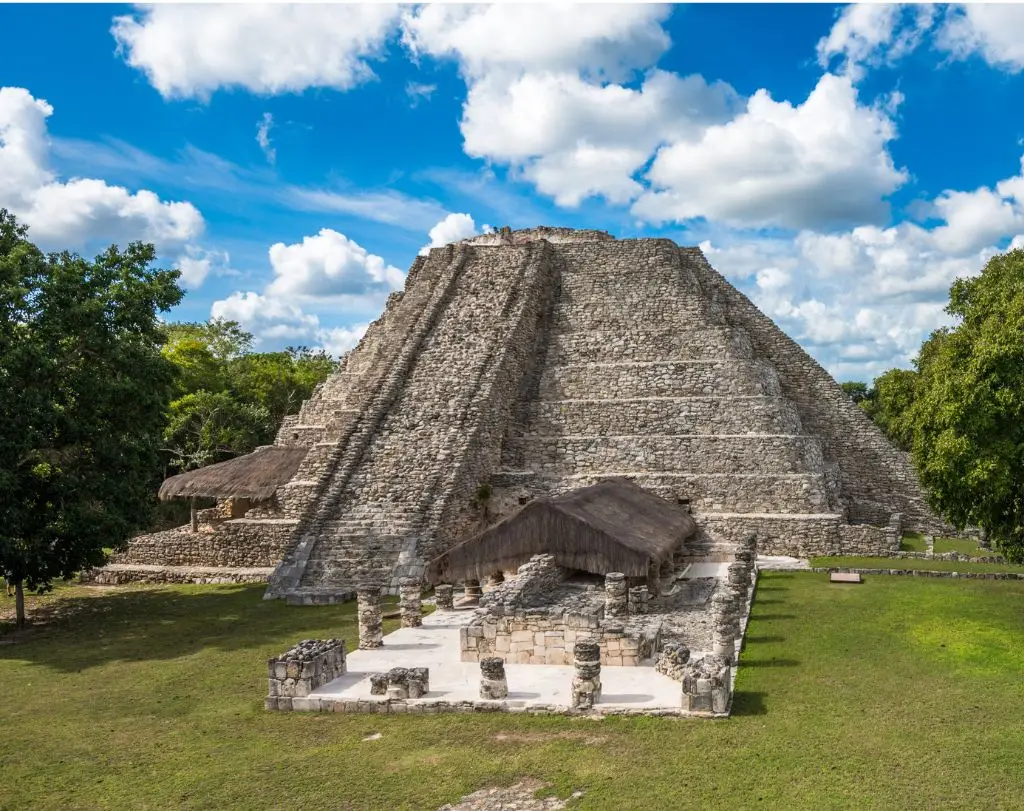
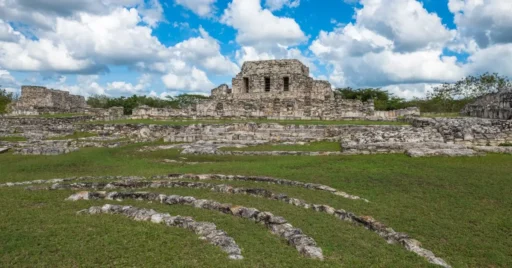
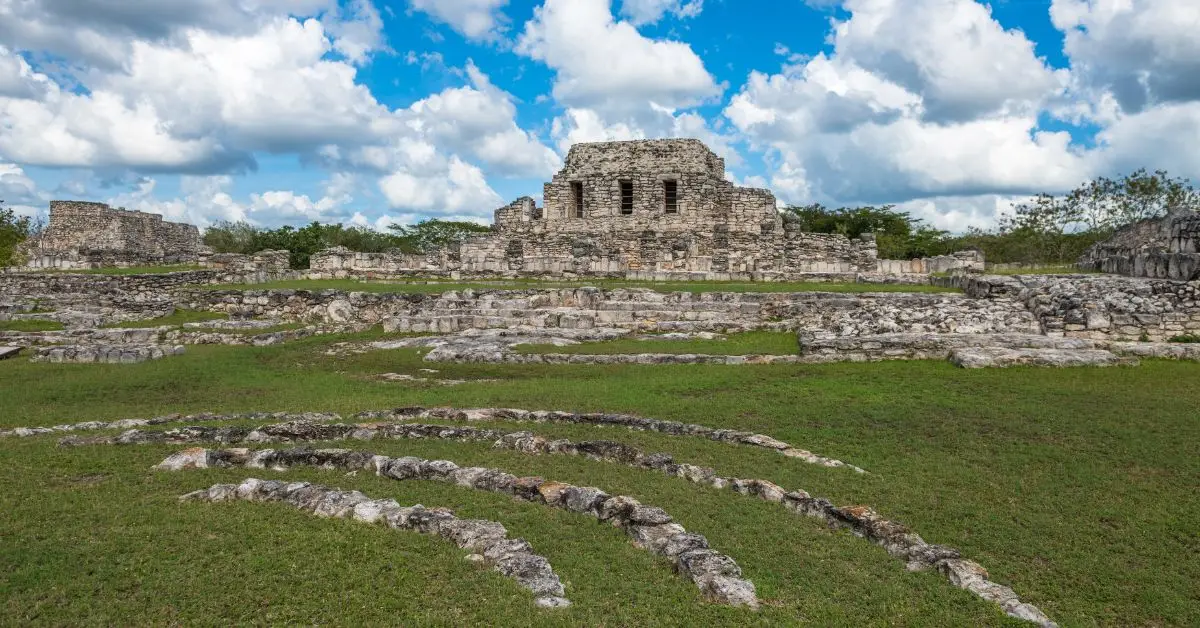
Among the lesser-known ruins I’ve visited, Mayapán stands out without question. Located just 40 minutes by car from Mérida, this walled city was the last great capital of the Mayan world before the Spanish arrived. If you’re looking for a Chichén Itzá alternative that keeps the architectural grandeur but ditches the tourist noise, this is it.
At Mayapán you can climb almost all the structures, including its own version of the Kukulkán pyramid, which closely resembles the one at Chichén Itzá. The view from the top is impressive: you can see the city’s layout, the surrounding temples, and the wall that encircles the entire site, giving you a real sense of how large this city once was.
Honestly, I can’t figure out why it doesn’t get more visitors — it’s one of the most worthwhile sites on the peninsula. Easy to reach, well signposted, and with all the atmosphere you need to lose yourself in time without distractions. Many of the structures are well preserved or partially restored, which makes it much easier to understand the urban layout and ritual life of the ancient Maya.
Kulubá
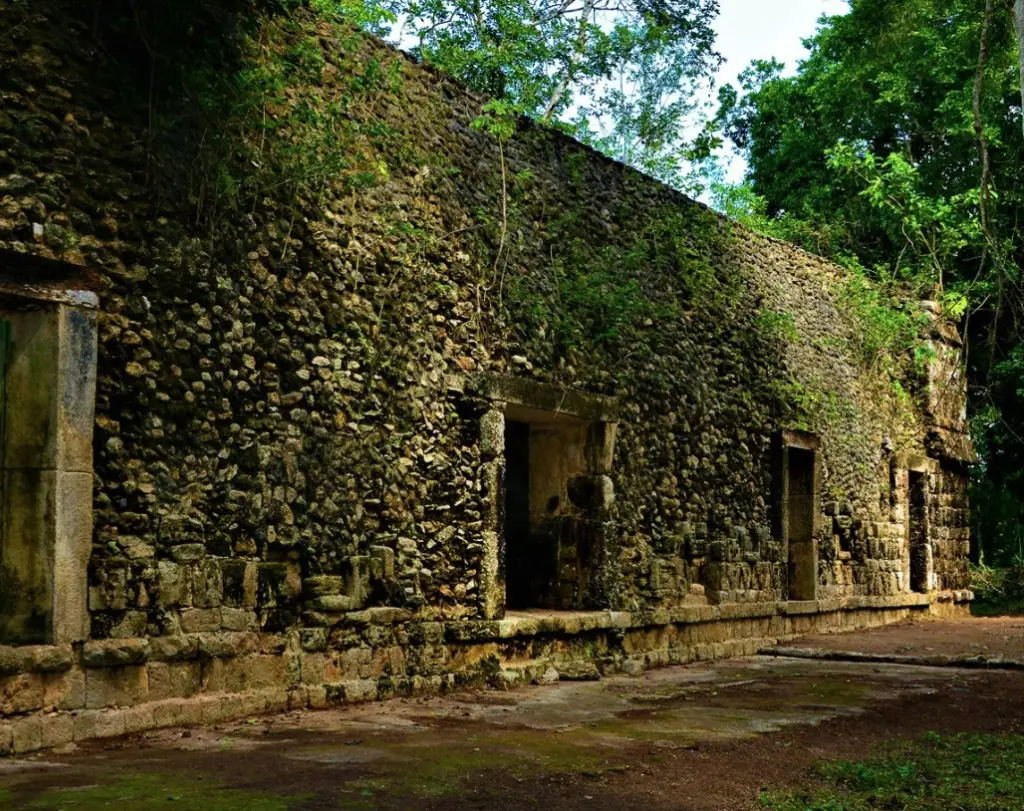
What makes Kulubá truly unique is that archaeologists are still actively working to uncover it, so it retains an air of a city that’s still waking up. It’s not unusual to see archaeologists at work nearby, or INAH staff explaining the latest findings. That closeness to the recovery process makes the visit feel alive — like you’re part of something still being written.
Kulubá blends Puuc and Toltec architectural styles, visible in its columns, decorated friezes, and structures bearing geometric motifs and Maya god masks. It’s a city of mixed influences, and you feel that as you walk among its partially restored buildings. As the archaeological work advances, more structures emerge from the vegetation, giving the whole place a sense of ongoing discovery.
The site has several significant structures, including a palace with columns and a ceremonial square. From certain elevated points, you can take in the flat, dense landscape of northern Yucatán — a beautiful visual backdrop, especially at dawn or late afternoon when the light picks out the textures of carved stone.
We don’t know whether, once fully excavated, this site will eventually draw the same crowds — which means right now is the ideal time to see it in an authentic way. If you enjoy discovering places with deep history that are still off the radar, Kulubá has everything: genuine Mayan architecture, vegetation that wraps around it protectively, and a special energy that only unawakened sites have.
Xiol
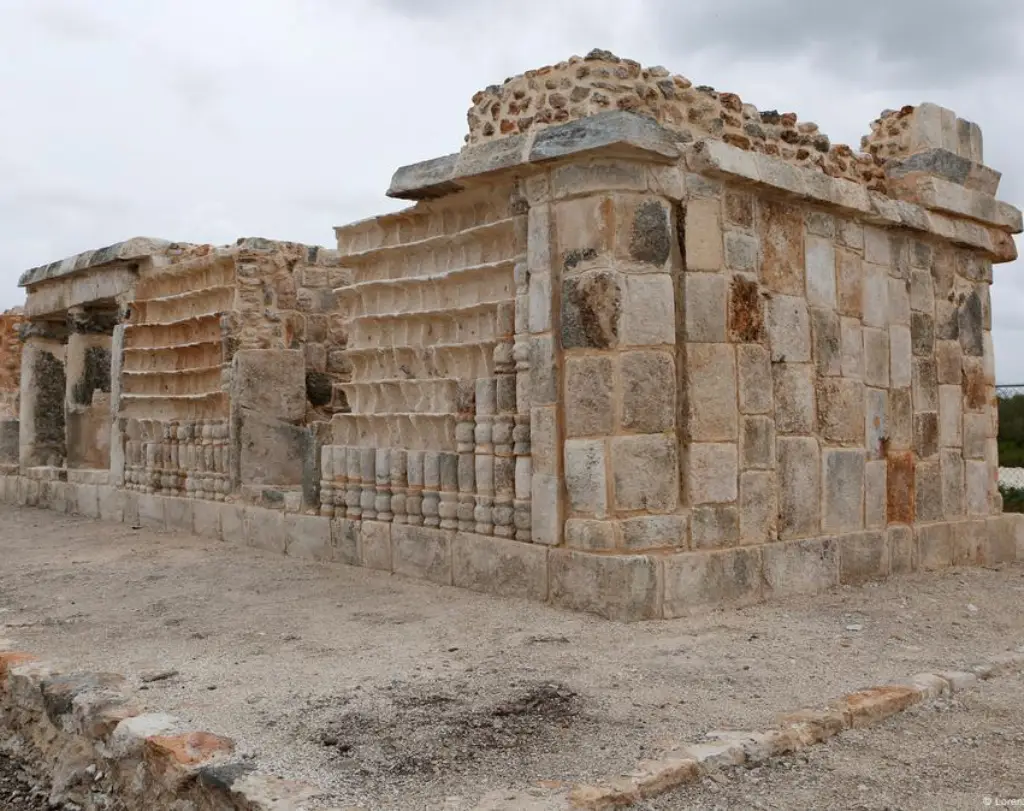
Xiol is a recently discovered Mayan city that’s shaking up everything we thought we knew about how people lived and organized themselves in this part of Yucatán. Despite being barely known, there’s already considerable excitement around the precision of its architecture and how well-preserved many of its structures are.
What makes Xiol genuinely remarkable is that it was a planned city from the outset — something you don’t see often in the northern peninsula. It had clearly defined residential zones, administrative spaces, temples, and plazas arranged with unmistakable urban logic. This points to an advanced society with well-established power structures and a complex community life. Everything was built in the Puuc style, known for its intricately carved stone friezes and the Chaac masks that adorn many facades.
Visiting Xiol is like slipping into history right at the moment it starts being told. Unlike more touristy sites, it still has that feeling of discovery — like you’re walking through a place that’s only just beginning to reveal its secrets. What’s striking is how naturally the city seems to have merged with its surroundings: ceremonial paths that wind through the vegetation, public spaces that follow the natural terrain, work areas that blend into the landscape.
For now, access is limited because the documentation and restoration work is still very much in progress. But that’s exactly what gives it a rare quality: the sense of being in the middle of a discovery that’s only just begun. And it’s a short drive from Mérida, so it’s easy to fit into a day, even combined with other plans.
Oxtankah
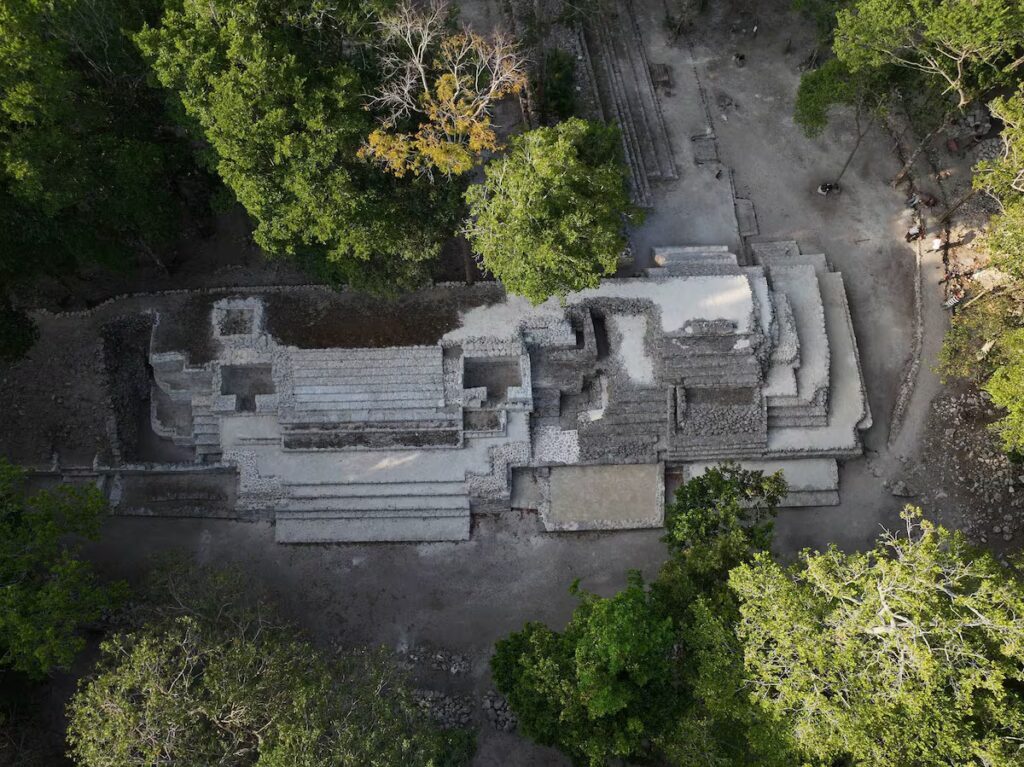
Among the lesser-known ruins in the south of Quintana Roo, Oxtankah stands apart for one very specific reason: it’s one of the few archaeological sites where Maya remains coexist with colonial-era elements, making it a witness to the encounter between two worlds.
When you arrive, the first thing that catches your eye is a small colonial chapel built right in the middle of the Mayan structures. It was erected by Spanish missionaries in the 16th century during their efforts to evangelize the region. The image is striking: limestone walls with Mayan inscriptions just meters from a ruined Christian temple.
The site was recently reopened and, for now, has a tranquility that’s hard to say how long will last. You can walk among the trees, discover temples still partially covered in vegetation, and stand in front of the colonial chapel without the interruption of mass tourism. It’s an ideal place for anyone who wants to reflect on history — not just through architectural grandeur, but through the collision of cultures.
Ichkabal
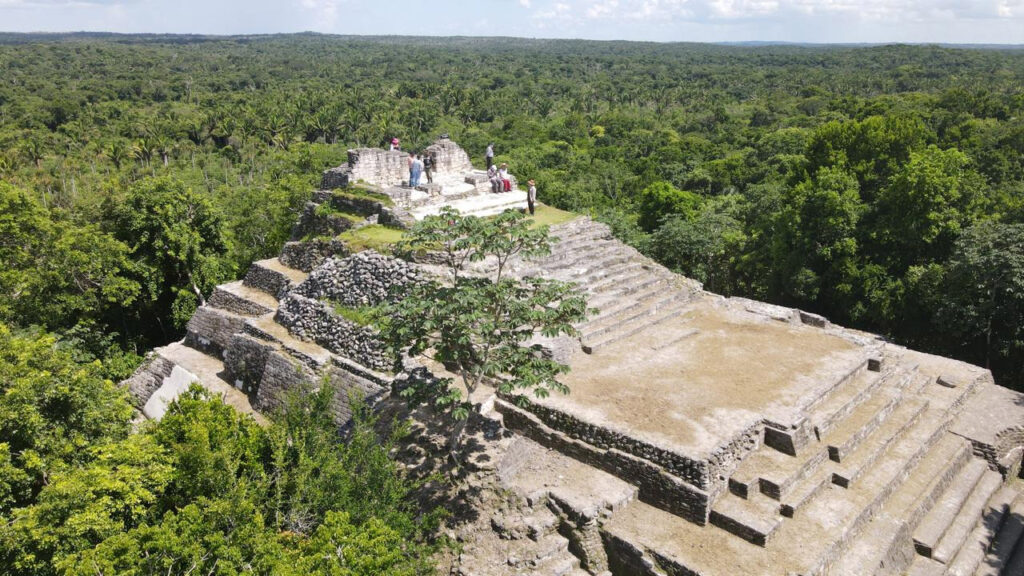
Among all the Mayan ruins set to open to the public, Ichkabal is the one generating the most excitement. Located near Bacalar in the south of Quintana Roo, this ancient Mayan city lay hidden under the jungle for centuries. Now, with excavation well advanced and its opening expected in the coming years, Ichkabal is poised to become one of the most significant archaeological zones in the Mayan world.
Ichkabal’s pyramids are taller than many others on the peninsula, including some of the most famous ones. From the top of its structures, still partially covered in vegetation, you can appreciate the scale of a city that was a key political and religious center during the Classic period — one that influenced major urban centers like Calakmul and Tikal.
Beyond its size, Ichkabal stands out for its complexity. Causeways, squares, temples, hydraulic systems — all revealing a high level of urban organization. Evidence also shows the city was inhabited for over a thousand years, making it a unique historical record of how power and daily life evolved in the Mayan world.
For now, visits are restricted to researchers and conservation teams, but it’s expected to open to the public soon. That makes this the perfect moment to put it on your radar. Whoever gets there in its early years will have the rare experience of exploring an almost-intact Mayan city, without the heavy reconstruction or mass tourism that defines better-known sites.
Tulum
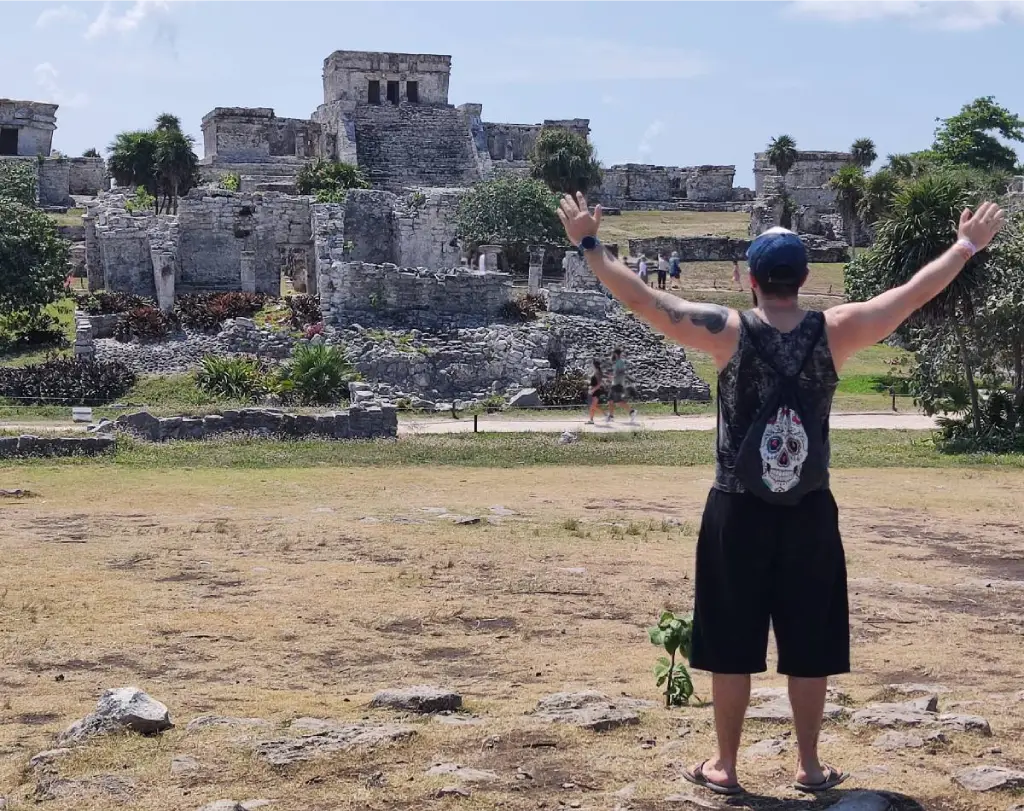
I’ve saved Tulum for last, because it may well be the most visited Mayan site after Chichén Itzá. It does get crowded, but its setting above the Caribbean makes it genuinely spectacular. Walking among Mayan temples while turquoise water glitters in the background is an image that stays with you.
Tulum isn’t about the scale of its structures — it’s about the setting. It’s the perfect place for travelers who want history and beach in the same experience.
The advantage is that the ruins are located right in Tulum town, so if you’re staying here it’s an easy walk or short drive.
Other ruins for the more adventurous
There are a handful of sites that are harder to reach but absolutely worth it: Dzibanché, Yaxchilán, and Bonampak. They’re more remote — some deep in the jungle — and getting there takes more planning. But the reward is enormous. You can explore temples wrapped in vegetation, listen to howler monkeys overhead, and enjoy a silence broken only by nature.
In these places, the feeling of discovery is total. They’re ideal for anyone who wants genuine adventure and doesn’t mind going off the beaten path.
If you’re someone who can see Mayan ruins as more than just ancient stones — as a window into ways of living that unfolded hundreds of years ago — this region will get under your skin. Do your research, pick the sites that interest you most, and go. The Mayan ruins beyond Chichén Itzá may not be as famous, but the fact that you can visit them without a crowd around you makes for an experience that’s hard to match.