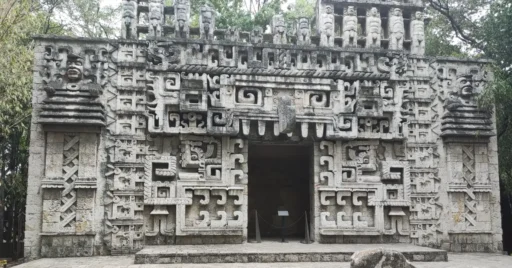
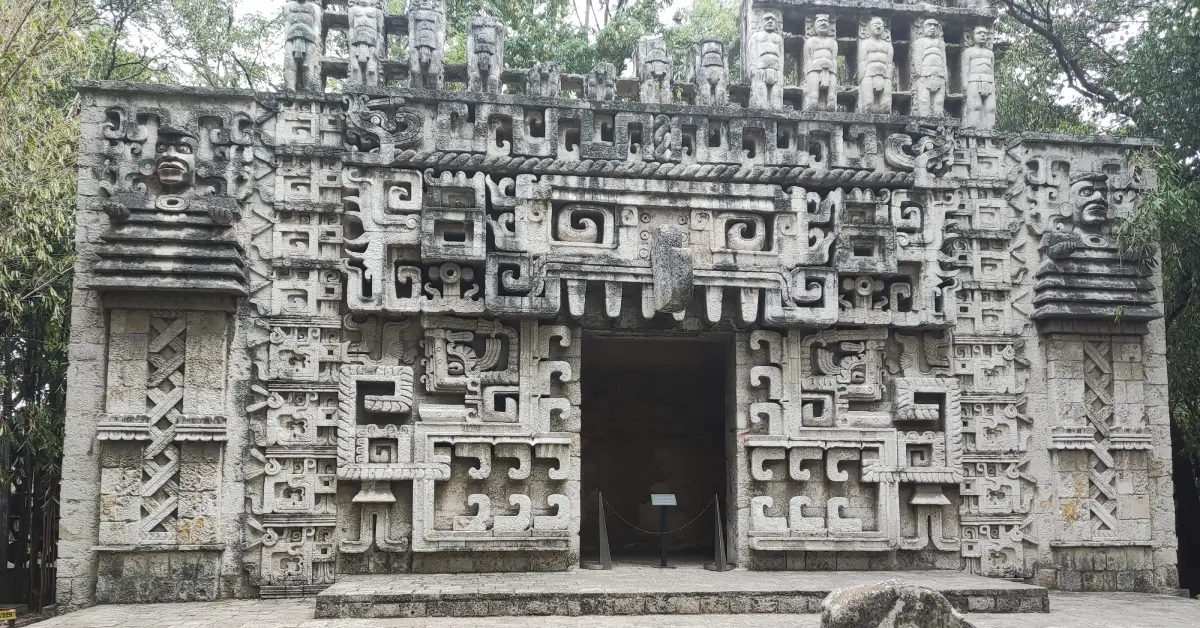
I’m not going to beat around the bush: the National Museum of Anthropology in Mexico City is the best museum I’ve ever visited. I’ve been to plenty of others, like the British Museum in London, the Louvre in Paris, or the Vatican Museums, and for my taste, this one takes the crown. Of course, that’s just my opinion, and it’s heavily influenced by how drawn I am to pre-Hispanic cultures. Everyone will have their own preferences, but there’s no denying this is one of the best museums in the world. It’s without a doubt one of the top recommendations in any Mexico City travel guide.
The National Museum of Anthropology in Mexico City is designed to give you a transformative experience that connects you with the essence of Mexico on a deep level. From its monumental architecture to the richness of its galleries, every step you take inside this place is a journey through centuries of history, art, and worldview.
The museum’s entrance alone is impressive. There you’ll find the Tlaloc monument and a kind of giant umbrella structure with a continuous curtain of water falling from it. And that’s just an appetizer for everything waiting for you inside:
Cultural diversity in every gallery
The National Museum of Anthropology is laid out masterfully, both on the ground floor and the upper floor, letting you move through the cultures of Mesoamerica and other regions of Mexico in a logical, immersive way.
Ground floor: Archaeology
This is, without question, the heart of the museum. The ground floor is divided into galleries, each dedicated to the great pre-Columbian civilizations, organized by geographic region and culture. That division, which seems so obvious, helps you build a mental map of how different civilizations settled Mexico, both in space and time. Here are the ground floor galleries:
- Introduction to Anthropology Hall
- Peopling of the Americas Hall
- Preclassic Central Highlands Hall
- Teotihuacan Hall
- Mexica Hall
- Oaxaca Hall
- Gulf Coast Hall
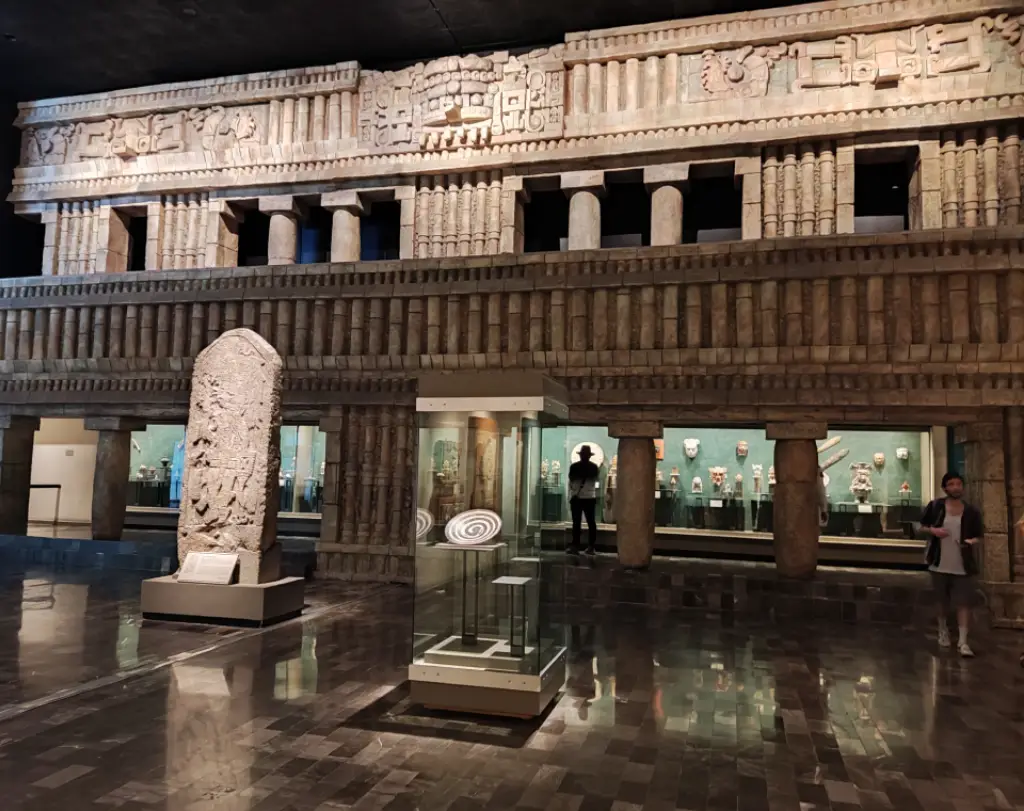
- Maya Hall
- Western Mexico Hall
- Northern Mexico Hall
Each gallery has flawless museography, with models, maps, reproductions, and original pieces that let you understand how these cultures lived, believed, and organized themselves.
Upper floor: Ethnography
Less visited, but just as interesting. This is where Mexico’s living indigenous cultures are presented. It’s a bridge between the pre-Hispanic past and the communities that still preserve their identity today. Most visitors stick to the ground floor, partly because it grabs more attention and partly because by the time you make it upstairs, you’re already pretty tired. Still, if you have the time and the interest to get closer to Mexico’s ethnographic reality, it’s absolutely worth it.
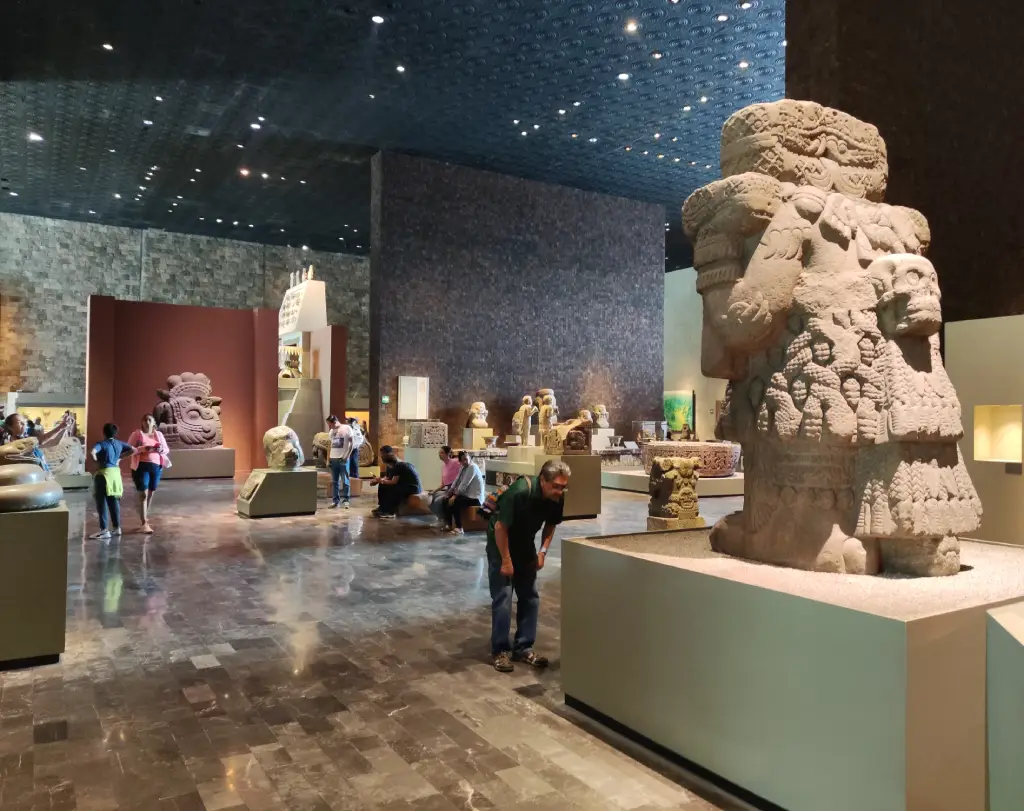
The National Museum of Anthropology’s most notable pieces
Every gallery in the museum has its own treasures, but there are a few pieces that are true stars, the kind that justify the visit all on their own. I’d suggest treating this list as things to look out for as you make your way through the museum, rather than beelining for them and leaving without seeing anything else.
The Sun Stone (Aztec Calendar)
Located in the Mexica Hall, this is probably the museum’s most famous piece. The first time you see it, its sheer size stops you in your tracks: 24 tons of history carved into stone. At the center is Tonatiuh, the sun god, surrounded by symbols that lay out the Mexica worldview. What really gets me is knowing this piece was buried after the Spanish conquest and rediscovered centuries later in the Zócalo. It has a magnetic presence that stops everyone who walks by.
The Obsidian Monkey
Also in the Mexica Hall, but pretty much the opposite of the Sun Stone. Where that piece is massive, this one is a small vessel shaped like a monkey emerging from obsidian. It’s a delicate, abstract work that challenges what you’d think possible with rudimentary tools. It’s the kind of object that makes you stop and think about the incredible creativity of pre-Hispanic artisans.
The Bat God mask
You can find this one in the Oaxaca Hall. It represents Piquete Ziña, a Zapotec deity of the underworld. It’s made of finely polished jade and blends human and bat features into a powerful, mystical image. It was found in a tomb at Monte Albán, which is why it’s believed to have had a ritual function. If you go looking for it and can’t find it, you might have the same reaction I did: it looks more like a panther to me than a bat.
The Tlaloc monolith
You’ll find this one right at the museum’s entrance, welcoming you in. It’s over 7 meters tall and weighs 168 tons. It represents the god of rain, and seeing that huge, stern face before you even step inside already gives you a sense of what’s waiting for you.
Pakal’s funerary mask
In the Maya Hall you’ll come across the incredible funerary mask of Pakal the Great, made entirely of jade. It’s displayed alongside a reproduction of his tomb, which makes the experience feel very immersive. The details on the mask are so fine it’s hard to believe it was made more than a thousand years ago without modern tools.
Where is the museum and what’s nearby?
The National Museum of Anthropology sits inside Chapultepec Park, in the first section, very close to Paseo de la Reforma, one of the areas with some of the best hotels in Mexico City.
Address: Av. Paseo de la Reforma y Calzada Gandhi S/N, Chapultepec Polanco, Miguel Hidalgo, Mexico City.
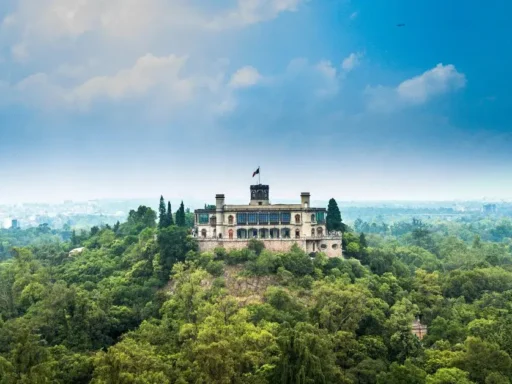
Nearby, you can visit other museums like the Tamayo Museum or the Museum of Modern Art, explore Chapultepec Castle, or just relax in the park’s green spaces. It’s a great area to spend the whole day.
Chapultepec Park is huge and generally very safe, at least during the day. You can take the chance to walk around, grab an ice cream, and mix in with the locals. If you’re staying near Paseo de la Reforma, you can even walk to the museum.
Frequently asked questions about the National Museum of Anthropology in Mexico City
Hours and days the museum is open
The National Museum of Anthropology is open Tuesday through Sunday, from 9:00 am to 8:00 pm. It’s closed on Mondays, like many museums in Mexico.
If you can, plan your visit on a weekday, since that’s usually when it’s least crowded.
Admission price
General admission to the National Museum of Anthropology costs $100 pesos as of 2025. It’s free for children under 13, seniors, students and teachers with a valid ID, and people with disabilities. On Sundays, Mexican citizens and foreign residents with a residency card get free access.
Time needed to tour the museum
This is a massive museum. You’ll need at least 4 hours to see it, though setting aside a full day is even better. The museum is huge, and with so many galleries and fascinating pieces, it’s best not to rush. If you’re a history buff, you can easily spend 6 to 7 hours exploring it.
Do you need to hire a guide?
It’s not required, but if you really love history and want to dig deeper into everything the museum has to offer, it’s well worth it. The galleries hold a lot of pieces and complex historical context.
That said, every piece has a small placard with detailed information in both English and Spanish. You can also rent audio guides for 75 pesos for a richer experience and a better understanding of the exhibits’ context.
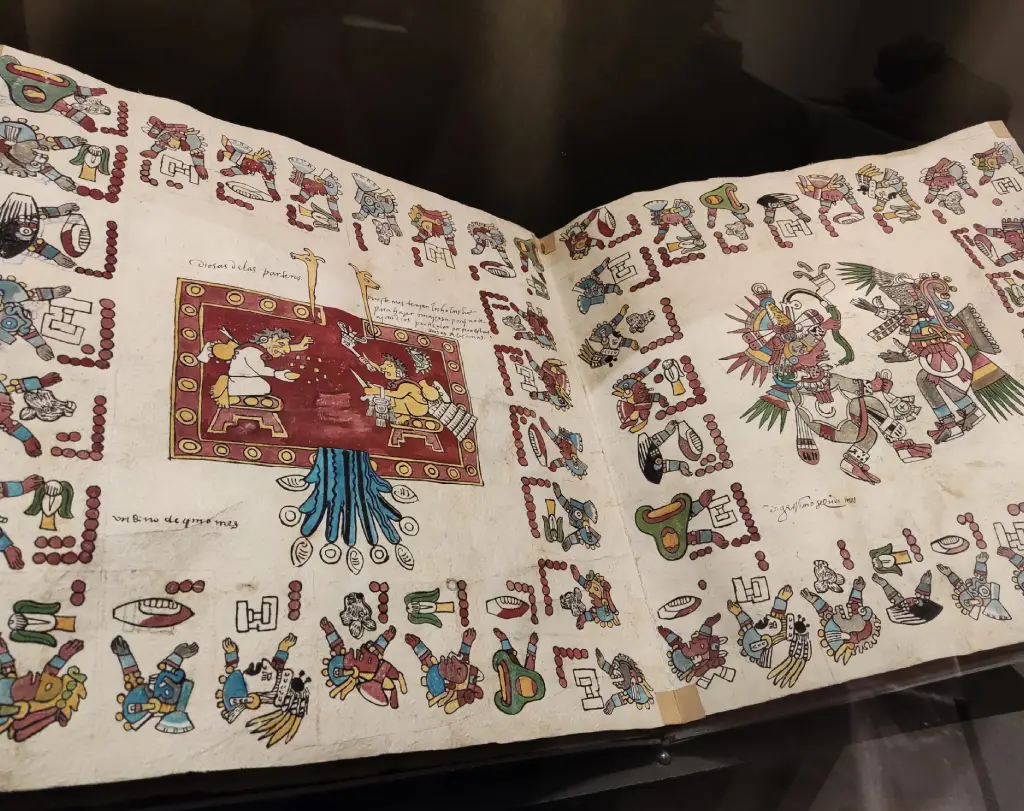
Can you take photos inside the museum?
Yes, photos without flash are allowed. Some galleries or specific pieces may have restrictions, but generally you can take as many photos as you want. Just follow the rules and skip the tripods and extra lighting.
Is the museum accessible for people with disabilities?
Yes. The museum has ramps, elevators, accessible restrooms, and barrier-free access. The signage is also clear, and the staff is generally very attentive.
What services does the museum offer?
The museum has a cafeteria, a gift shop, rest areas, and restrooms spread throughout the site. It also offers educational workshops and guided tours for school groups.
What’s somewhat lacking are food options. There’s a small cafeteria, but it’s not really enough if you’re planning to stay all day. I’d recommend bringing water and a snack.
Tips for enjoying your visit
- Arrive early to avoid crowds, especially on weekends.
- Wear comfortable shoes, you’ll be doing a lot of walking.
- Stay hydrated and eat something light before you go in.
- Bring a list of the pieces you want to see, especially if you’re short on time.
- If you can, go on a weekday, since there are fewer people and the experience flows better.
As you can see, the National Museum of Anthropology is a cultural gem, not just for Mexico, but for the world. If you’re in Mexico City, it’s a must-visit. Every gallery is a portal to the past, every piece a testament to the roots that shape who we are.
Is it worth it? Absolutely. Does it take time and energy? Quite a bit. Will I go back? Every time I’m in Mexico City I try to visit again, and I’d encourage you to do the same.