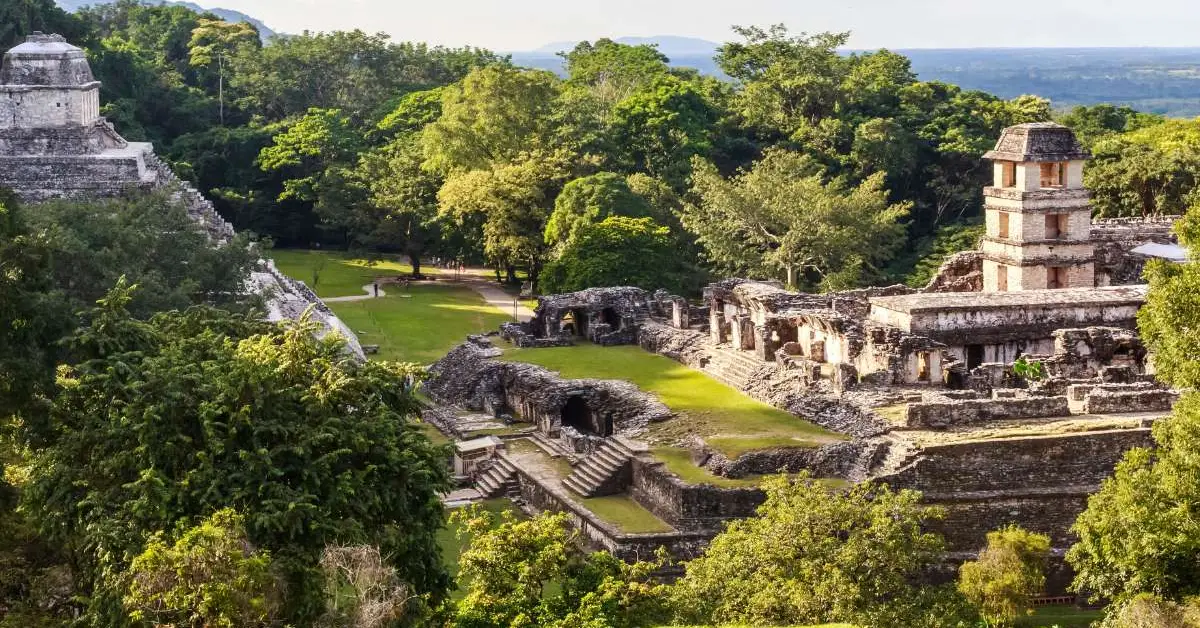
If there’s one place in Mexico that can drop you into a mythical era, it’s Palenque, Chiapas. You get history, nature, and mysticism in equal parts here, and the visit ends up being a lot more than a walk around another archaeological site.
When I was there, it clicked right away why Palenque feels so different from bigger-name Maya ruins like Chichén Itzá. It isn’t packed with tourists, and it sits deep in the Mexican jungle. Put those two together and the place has a feel all its own. If you’re planning a trip to this corner of Chiapas, here’s what you need to know to make the most of it.
Where is Palenque and how do you get there?
Palenque is in the state of Chiapas, in southeastern Mexico. The archaeological zone sits inside Palenque National Park, surrounded by thick jungle and a ton of wildlife. Since it’s inside a national park, getting there isn’t exactly easy.
One of the easiest ways in is to fly from Mexico City to Villahermosa (Tabasco). From there, you’ve still got about a 2-hour drive to Palenque. You can do that stretch in a rental car or by bus. The bus usually takes longer.
A lot of people make the most of their Chiapas trip by stopping in San Cristóbal de las Casas first. It’s an officially recognized Pueblo Mágico and well worth seeing. From there you can catch a bus to Palenque. On paper it’s around 4 hours. In practice, it’s often closer to 8.
People also ask me about driving from the Yucatán in a rental car, since it’s under 700 km. I don’t recommend it. The roads in between are rough, and you can easily lose a couple of days of your trip. If you’re coming from anywhere in Yucatán, fly from Cancún to Villahermosa and head to Palenque from there.
You can also come from Flores and Tikal in Guatemala. Tikal is another big Maya site that’s absolutely worth it, so plenty of travelers work it into their Maya ruins route. From there, Palenque is about 6 hours by car (longer by bus). Keep in mind you’ll be crossing an international border. And since Flores is an island, you’ll need to add a boat ride too.
The magic of Palenque
Palenque is a Maya city, sure, but it has an energy and a history that pull you in fast. Step into the ruins and the jungle, the birdsong, and the howler monkeys calling overhead make it feel like you’ve walked into another world.
The natural environment changes everything
One of the things that hits you most is that the city sits inside a national park with incredible biodiversity. Walking between temples, you might spot gray foxes, raccoons, even monkeys swinging through the trees.
Fewer tourists, more authenticity
This isn’t Chichén Itzá. You can wander the ruins without a crowd breathing down your neck. My advice: get there first thing in the morning. You’ll beat the worst of the heat and watch the mist lift through the trees. It’s almost magical.
I got lucky and climbed the Temple of the Inscriptions right as the fog was drifting over the treetops. I was speechless. For a while I forgot about photos and my phone. I just stood there, taking it all in, feeling like the luckiest person in the world.
What to see at the Palenque archaeological site
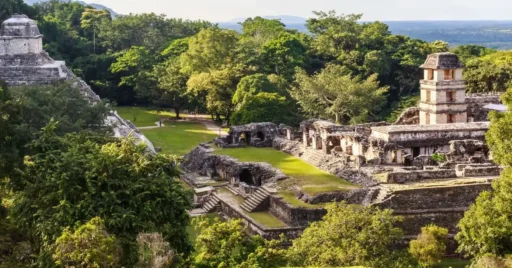
Palenque is a big site with plenty of impressive structures. And it feels different from other archaeological zones. More than looking at ruins, you’re walking through a lost Maya city in the middle of the jungle.
These are the main temples and buildings you shouldn’t miss:
Temple of the Inscriptions
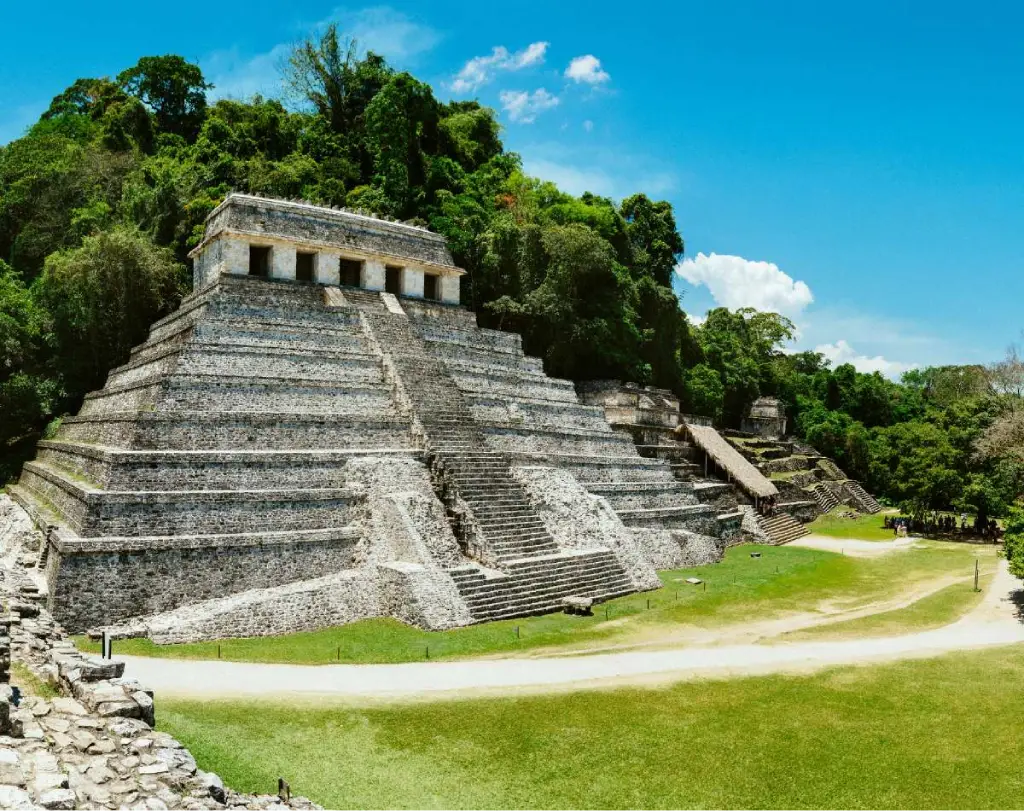
This is the most important temple at Palenque and one of the big ones in the entire Maya world. It was built in honor of the great ruler Pakal the Great. One of the most remarkable tombs in Mesoamerica was found inside, along with its famous stone sarcophagus lid. People have come up with all kinds of theories about what that lid means.
The temple rises in steps above the jungle. At the top there are hieroglyphic inscriptions that tell the city’s story. Climb it early in the morning, with the mist still covering the jungle, and it feels like time travel.
The Palace
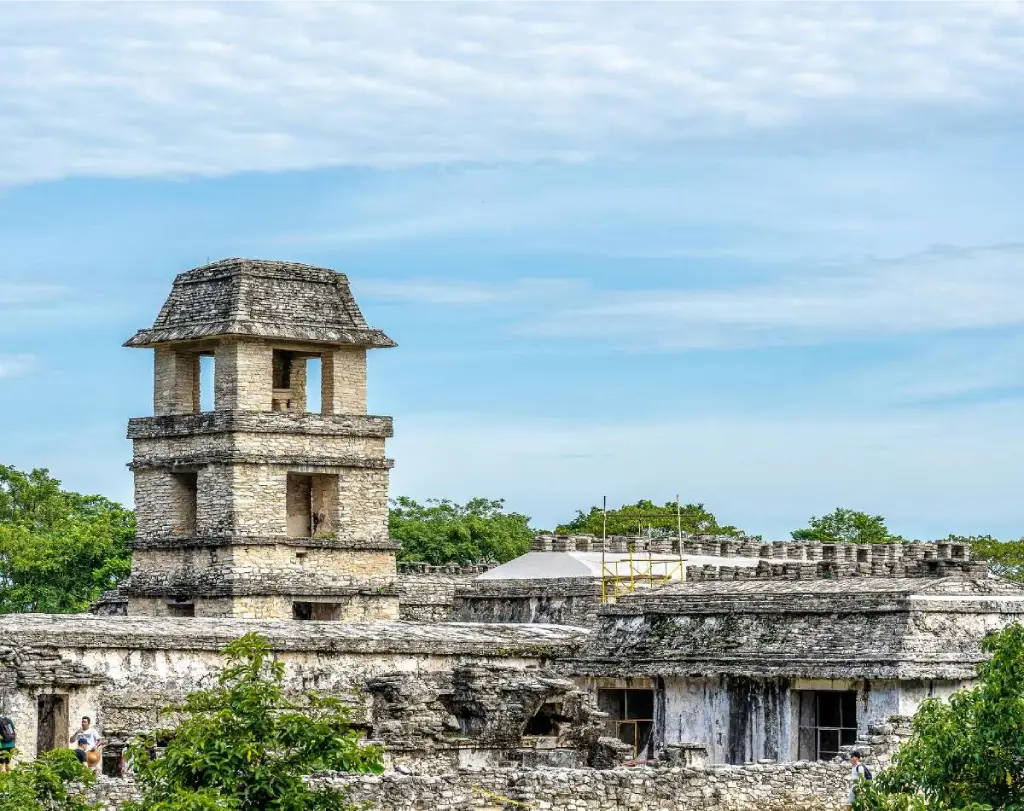
This huge complex sits in the middle of the city and was the seat of Palenque’s political and administrative power. Look for the vaulted corridors, the inner courtyards, and the observation tower. It’s believed they used it to study the sky.
The Palace is also covered in reliefs and carved figures. Some show Maya priests and rulers in religious ceremonies. And don’t leave without taking in the panoramic views from the tower.
Temple of the Sun, Temple of the Cross, and Temple of the Foliated Cross
These three temples make up the Cross Group Triad, dedicated to Maya mythology. Climb the Temple of the Sun. From the top you get some of the best views of the jungle.
Once you’ve seen the main structures, don’t head out yet. Some of the best moments are on the trails, where smaller temples sit half-swallowed by vegetation. That’s as close as you’ll get to feeling like an explorer.
With howler monkeys roaring in the trees, the whole thing feels a lot wilder. Close your eyes, take a deep breath, and let the jungle wrap around you.
Where to stay in Palenque
You’ve basically got three areas to stay in Palenque:
- Palenque town: A charming Magical Village and your best bet for cheaper stays and services. It’s the farthest from the ruins (around 9 km), but you’ll have plenty of restaurants, shops, and options.
- La Cañada: A tourist area that grew up next to the bus station to cater to travelers. It’s closer to the ruins than the town and has mid-range hotels and lots of restaurants.
- Inside Palenque National Park: The closest option to the ruins (practically next door). It’s also the priciest and has the fewest services. What you get in return is a night right in the jungle.
If you want something you’ll remember for years, I’d stay inside Palenque National Park. It’s not the cheapest option, but sleeping in the jungle, surrounded by plants and wildlife, sticks with you.
Just be ready for the howler monkeys at night. Sleeping through all that jungle noise can be tough at first. Trust me, it’s worth it.
What to see near Palenque
If you’ve got extra time, there are some incredible places around Palenque you shouldn’t miss.
Agua Azul Waterfalls
These waterfalls are 64 km from Palenque and famous for their intense turquoise water. You can swim in some of the natural pools, and the photos come out amazing.
Misol-Ha
A 35-meter waterfall where you can swim and even poke around a cave behind the falling water. It’s about 21 km from Palenque, so it’s an easy add-on.
Bonampak and Yaxchilán
Two Maya sites fewer people know about, and both are spectacular. Bonampak is famous for its colorful murals. Yaxchilán is deep in the jungle, and the only way in is by boat along the Usumacinta River.
If you want to hit several waterfalls and ruins in one day, booking a tour from Palenque is the easiest way to do it.
What to eat in Palenque
The food in Chiapas is delicious, with Maya and mestizo influences. Here are a few dishes you have to try:
Cochito al horno (baked pork)
A traditional dish of pork marinated in spices and slow-baked until it’s tender and juicy. It’s one of the most typical dishes in the region.
Chipilín tacos
Chipilín is a local herb that goes into soups and tamales. In Palenque they often put it in tacos too, with melted cheese and fresh corn tortillas.
Sopa de pan (bread soup)
A classic Chiapas dish with tomato broth, fried bread, plantain, and spices thrown in.
Chiapas coffee
Don’t leave Palenque without trying the local coffee. Chiapas is one of Mexico’s top coffee-producing regions, and restaurants around here serve it freshly ground.
Palenque is a place you have to experience, not tick off a list. Exploring the temples, watching the morning mist rise over the jungle, hearing howler monkeys from your hotel… it stays with you.
If you get the chance to go, don’t think twice. Just go, and give it the time it deserves.