In Mexico, food is tied to the country’s history, culture, and traditions. A lot of dishes carry a story that’s been passed down for generations. You notice it at a busy market stall and you notice it at an elegant restaurant. Either way, you’re eating more than a list of ingredients. You’re getting a taste of Mexico itself.
Mexico, a different flavor in every region
Mexico is huge, and the food changes a lot from one region to the next. Some places are so different it almost feels like you’ve crossed a border. In the north, it’s grilled meats and soft flour tortillas. In the south, corn, moles, and stews loaded with spices take over. That regional mix is exactly why eating your way through Mexico never gets old.
Here are some of the best-known dishes in Mexico, with what goes into them, where they come from, and what they mean to people here.
Tacos
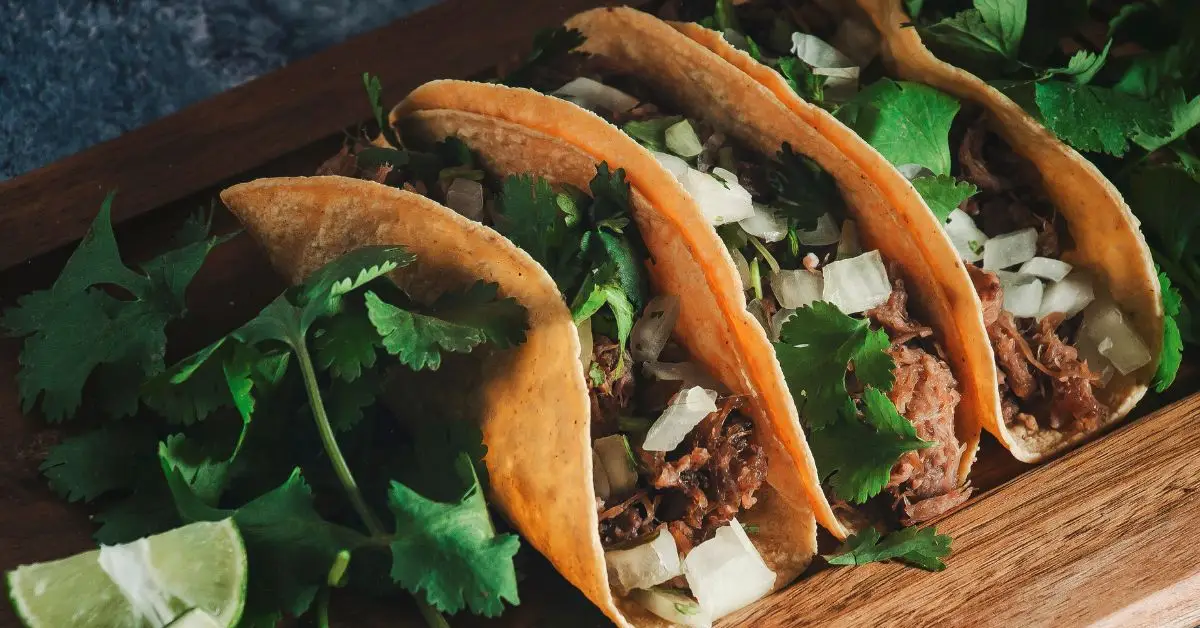
If you think of Mexican food, you think of tacos. They’re corn or flour tortillas with a filling that changes depending on the region. These are some of the most popular kinds:
Tacos al pastor
They come from Middle Eastern cooking. The pork is marinated in achiote, spices, and pineapple juice, then cooked on a vertical spit, a lot like shawarma. They’re served on corn tortillas with pineapple, onion, and cilantro. Sweet and savory in the same bite, and it works.
Barbacoa tacos
Barbacoa tacos come from central Mexico. The lamb (or sometimes beef) is wrapped in maguey leaves and slow-cooked in an underground pit. The meat comes out really tender and juicy. They’re usually topped with spicy salsa and a squeeze of lime, and a lot of families save them for special get-togethers.
Fish tacos
These are a Baja California staple. The fish is battered or grilled and goes on a corn or flour tortilla with shredded cabbage, tangy lime mayo, and spicy salsa. If you want something light and fresh, these are the ones to order.
Carnitas tacos
Carnitas come from Michoacán. The pork is cooked slowly in its own fat with citrus and spices until it’s tender and full of flavor. In tacos, it’s usually served with green or red salsa, onions, cilantro, and some crunchy pork rinds on top.
Stew tacos
These are what you’ll find at the little family eateries and markets. They’re filled with home-style stews like pork crackling in green sauce, mole, rajas with cream, potatoes with chorizo, or even scrambled eggs with cactus. They’re cheap, filling, and taste like someone’s home cooking.
Suadero tacos
Suadero tacos are all over the streets of Mexico City. Suadero is a tender, juicy cut of beef that’s cooked slowly and served on small corn tortillas with salsa, onion, and cilantro.
The best thing about tacos is that you can fill them with almost anything. Then there are the salsas, from mild and creamy to the ones that really bring the heat.
Cochinita Pibil
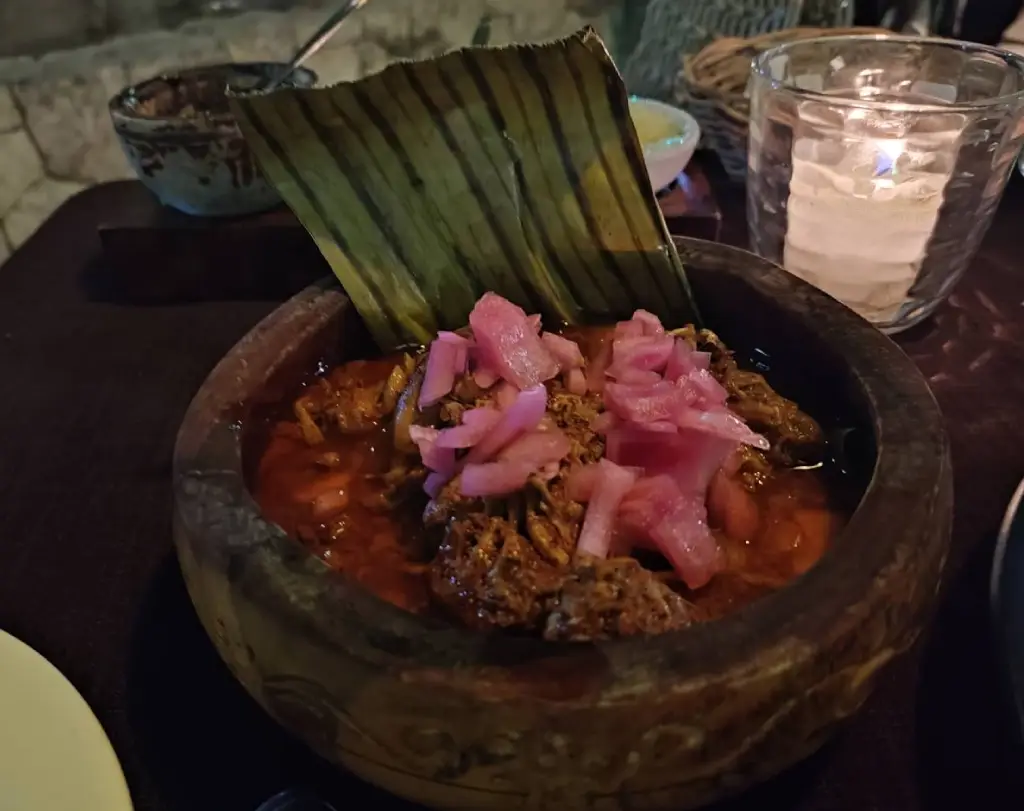
My personal favorite is cochinita pibil, a traditional dish from Yucatán that goes back to pre-Hispanic times. The pork is marinated in achiote paste, bitter orange juice, and spices. Then it’s wrapped in banana leaves and slow-cooked in an underground oven called a pib.
When it’s made this way, the meat melts in your mouth and it’s packed with flavor. It’s usually served with pickled red onions and habanero chile. Tangy, spicy, and juicy all at once.
Birria
Another one of my favorites is birria, a slow-cooked stew traditionally made with goat, though beef or chicken are common too. It comes from Jalisco, and the mix of chiles and spices gives it a ton of flavor.
You’ll often find birria at weddings and other big celebrations. The meat is so tender it falls apart with a fork, and the broth is made for dipping warm tortillas.
Chilaquiles
Chilaquiles are a breakfast you have to try at least once. They’re fried tortilla chips soaked in red or green salsa and topped with cream, cheese, onions, and often eggs or shredded chicken.
If you’re not used to it, it might seem like a heavy way to start the day. But it’s delicious and really satisfying. People love chilaquiles because they’re simple and easy to customize: add avocado, beans, or whatever toppings you like.
Pozole
Pozole is a traditional soup made with big hominy kernels that are cooked until they open up like flowers. It’s usually made with pork or chicken and served with shredded lettuce, radishes, onions, oregano, lime, and salsas to taste.
It goes back to pre-Hispanic ceremonies. Today, pozole is a go-to dish for holidays like Independence Day and for family get-togethers.
Tamales
Tamales are a staple of Mexican cooking, and they bring people together. They’re made with corn dough and filled with meat, chilies, beans, or sweet stuff like raisins and chocolate, then steamed in corn husks or banana leaves.
Every region has its own version. In Oaxaca, for example, they’re wrapped in banana leaves and come out soft and savory. Part of what makes tamales special is the flavor, and part of it is the tradition of making them together as a family.
Chiles en Nogada
Chiles en nogada come from Puebla, and they’re one of the most elaborate dishes in Mexican cooking. Poblano peppers are stuffed with a sweet and savory mix of ground meat, fruit, and spices. They’re topped with a creamy walnut sauce, pomegranate seeds, and parsley, which gives you the colors of the Mexican flag.
That’s why people eat them mostly in September, during the country’s patriotic celebrations.
Elotes and Esquites
Elotes and esquites are corn served two ways on the street. An elote is the whole cob, and esquites are the kernels served in a cup.
Both usually get slathered with mayo, cheese, chili powder, and lime, and the mix of textures and flavors is hard to resist. Grilled or boiled, they’re one of the best street snacks you’ll find.
The importance of tortillas
In Mexico, tortillas aren’t just a side. They’re the foundation of the whole cuisine. They’re made mostly with nixtamalized corn, and they’re the base of classic dishes like tacos, enchiladas, quesadillas, tostadas, and chilaquiles.
In many communities, people still make tortillas by hand, grinding the corn on a metate (grinding stone) and cooking them on a comal (flat griddle). They taste different that way, and it keeps a very old tradition alive.
Something I find really cool is how many colors tortillas come in. Depending on the corn, you’ll see white, yellow, red, and blue ones. Blue corn tortillas, for example, look great, have more flavor, and are rich in antioxidants.
Tortillas go with pretty much any meal, from a simple breakfast with beans to a big spread of cochinita pibil. If I had to pick one symbol of Mexican cooking, it would be the tortilla.
A culinary journey through culture and history
Mexican cooking is built on native ingredients like corn, chiles, beans, and avocados. Add fresh herbs, spices, and whatever grows locally, and you get food that’s flavorful, nutritious, and deeply tied to the culture.
Eating in Mexico is also a way to get closer to its history and traditions. Cochinita pibil in Yucatán, street corn in Mexico City… every dish tells you something about the country’s culture and how creative people are in the kitchen.
If you can, try each dish in the region it comes from. That’s where, between the smells, the flavors, and the warm hospitality, you’ll understand why Mexican cuisine is recognized as a UNESCO Intangible Cultural Heritage of Humanity.